Openfield
A design proposal demanding to slow down, reassess values, and get it right the first time.
by TJ Dubler
April 29, 2026
Arch 457 | Professor Julian Harake
Montana State University
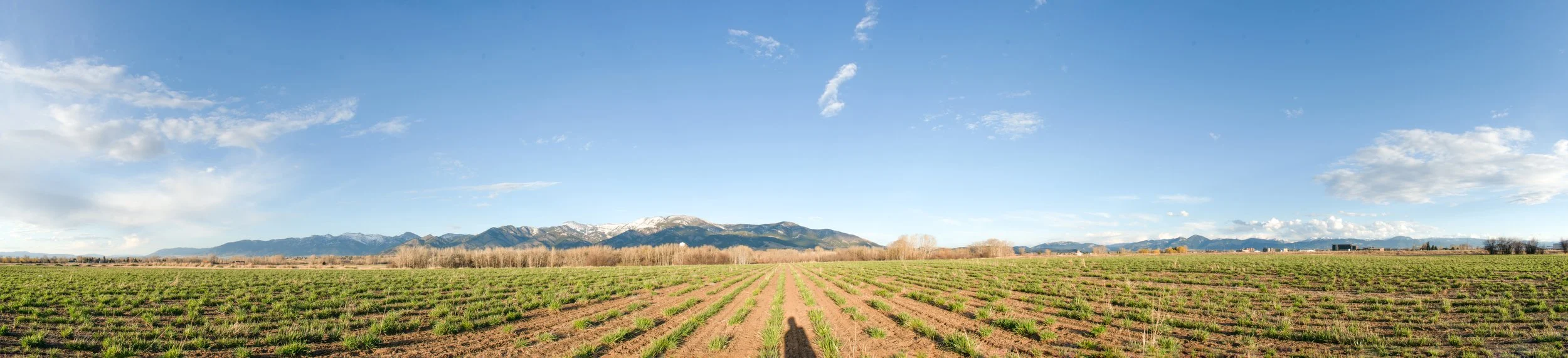
When Bozeman developers see agricultural land, they see an empty slate without cultural value. Their instincts are often to construct a building as fast as possible and as cheap as possible. This approach has led to the rapid - and reckless - development of Montana for more than 50 years.
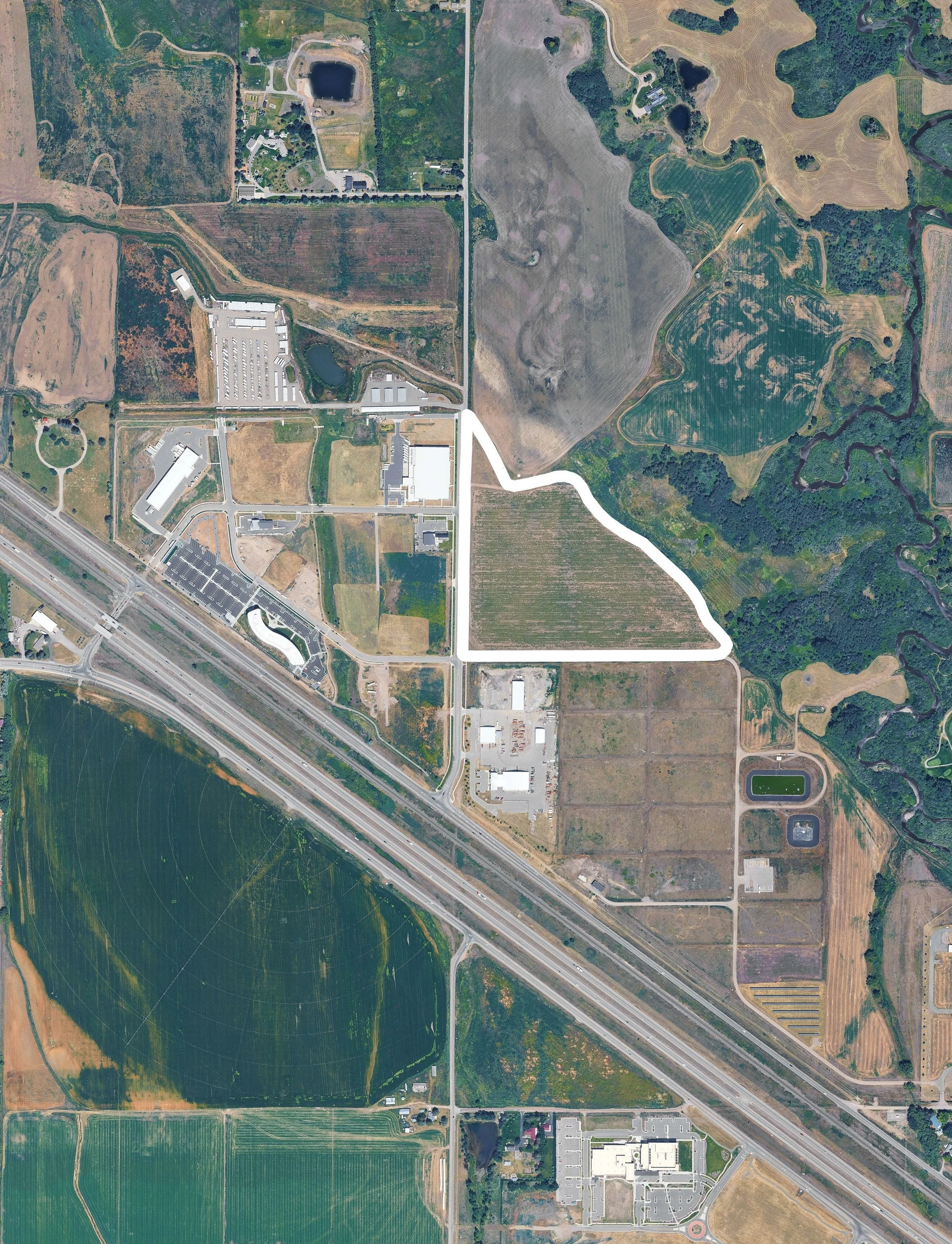
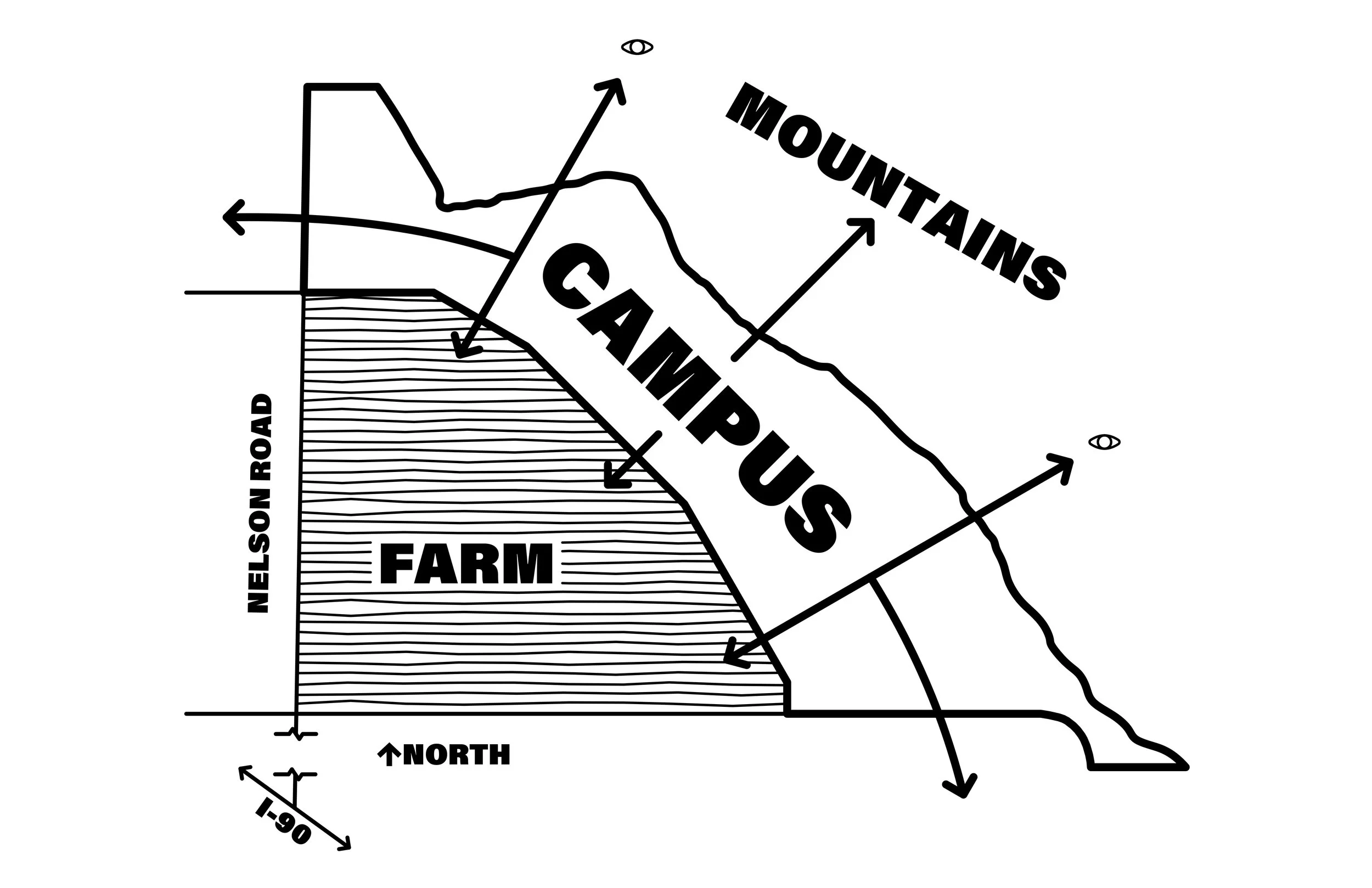
Today, at the Northeast corner of Royal Wolf Way and Nelson Road, we face the same pattern. Roughly 30 acres of open farmland has been generously donated for the upcoming Montana Arts Campus. SMA & A&E see no issue turning this place into a sea of asphalt with isolated buildings that face outwards, offering only seductive mountain views. They have prioritized parking and buildings over the community and open space.
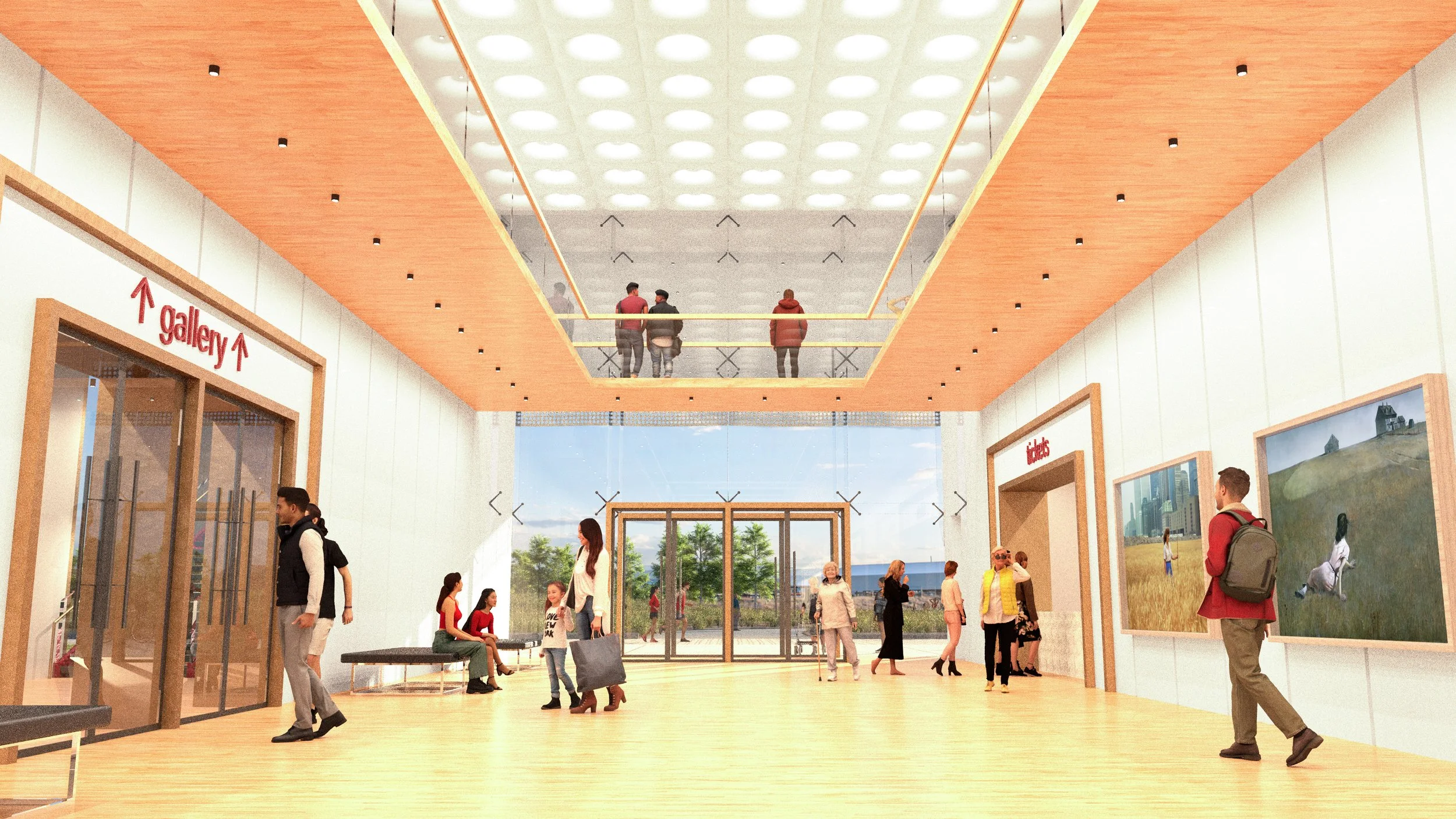
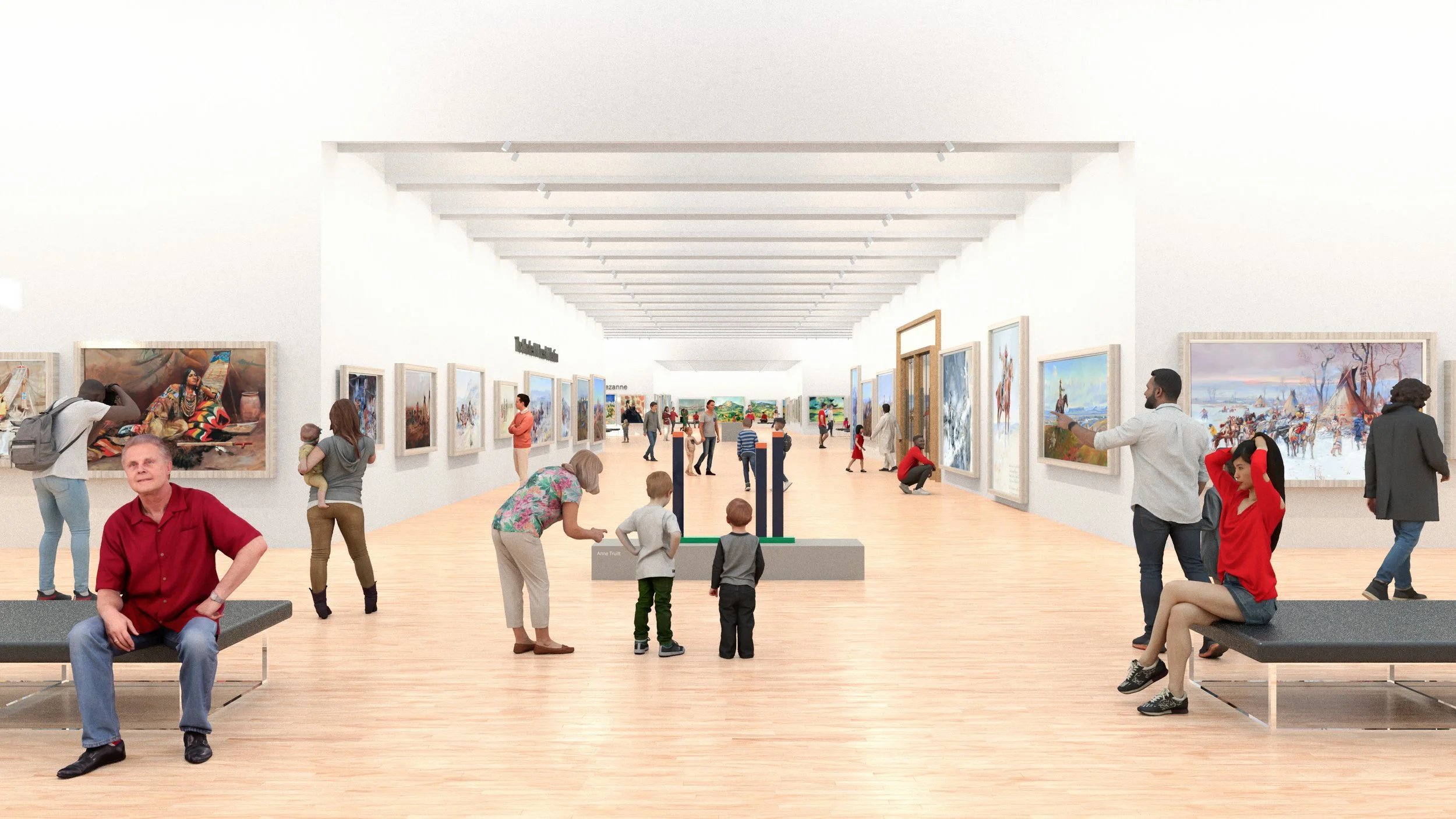
Permanently destroying this open space goes against the Bozeman Art Museum’s civic mission of integrating people, land, and art.
There is a better solution.
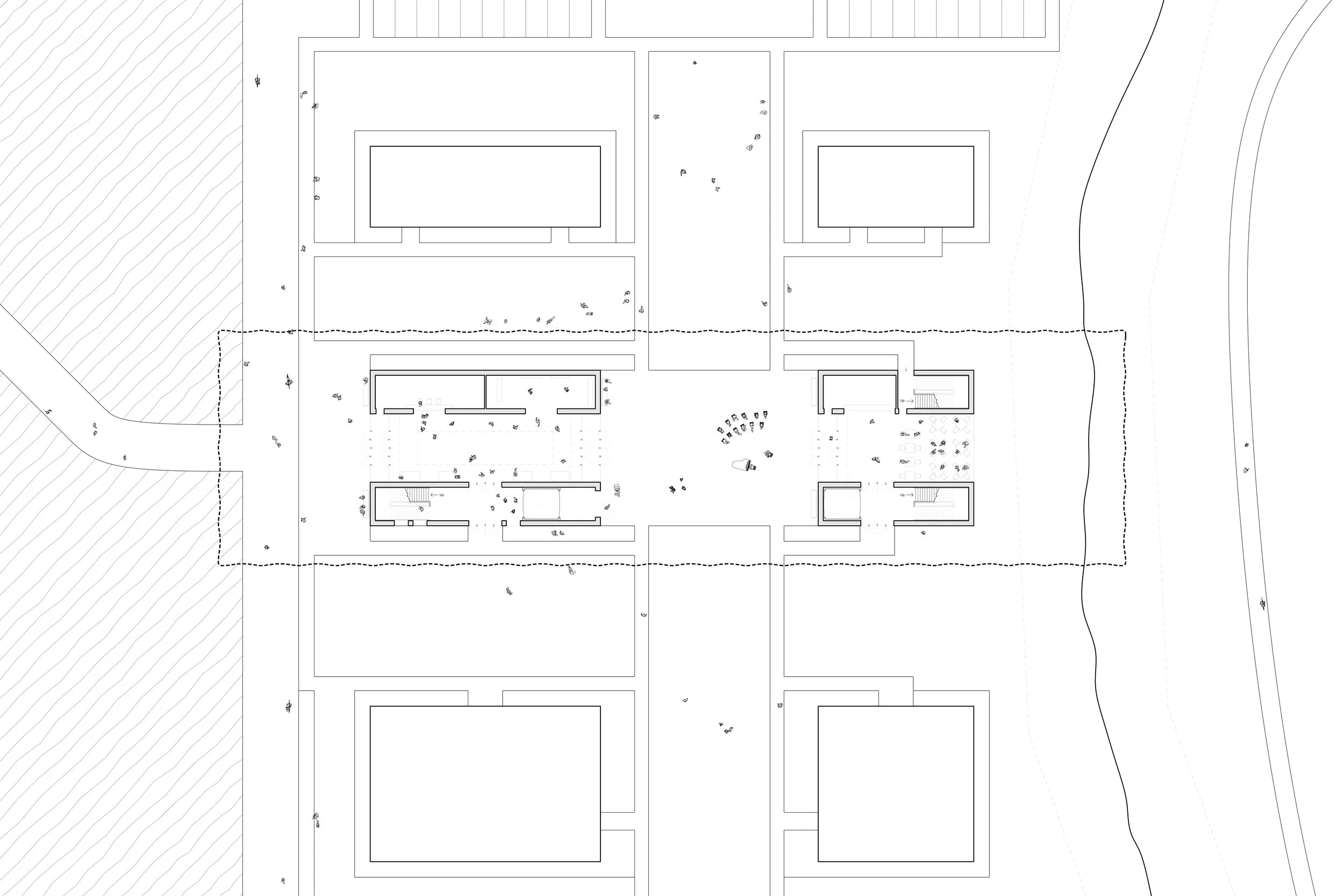
I propose that the campus should be designed around the farm. Farms are not void; they are full of life and sacred activity. They are a part of Montana’s beating heart. As Bozeman continues to urbanize, farmland and natural spaces continue to diminish. In 20 years, we will wish we had protected these wonderful places.
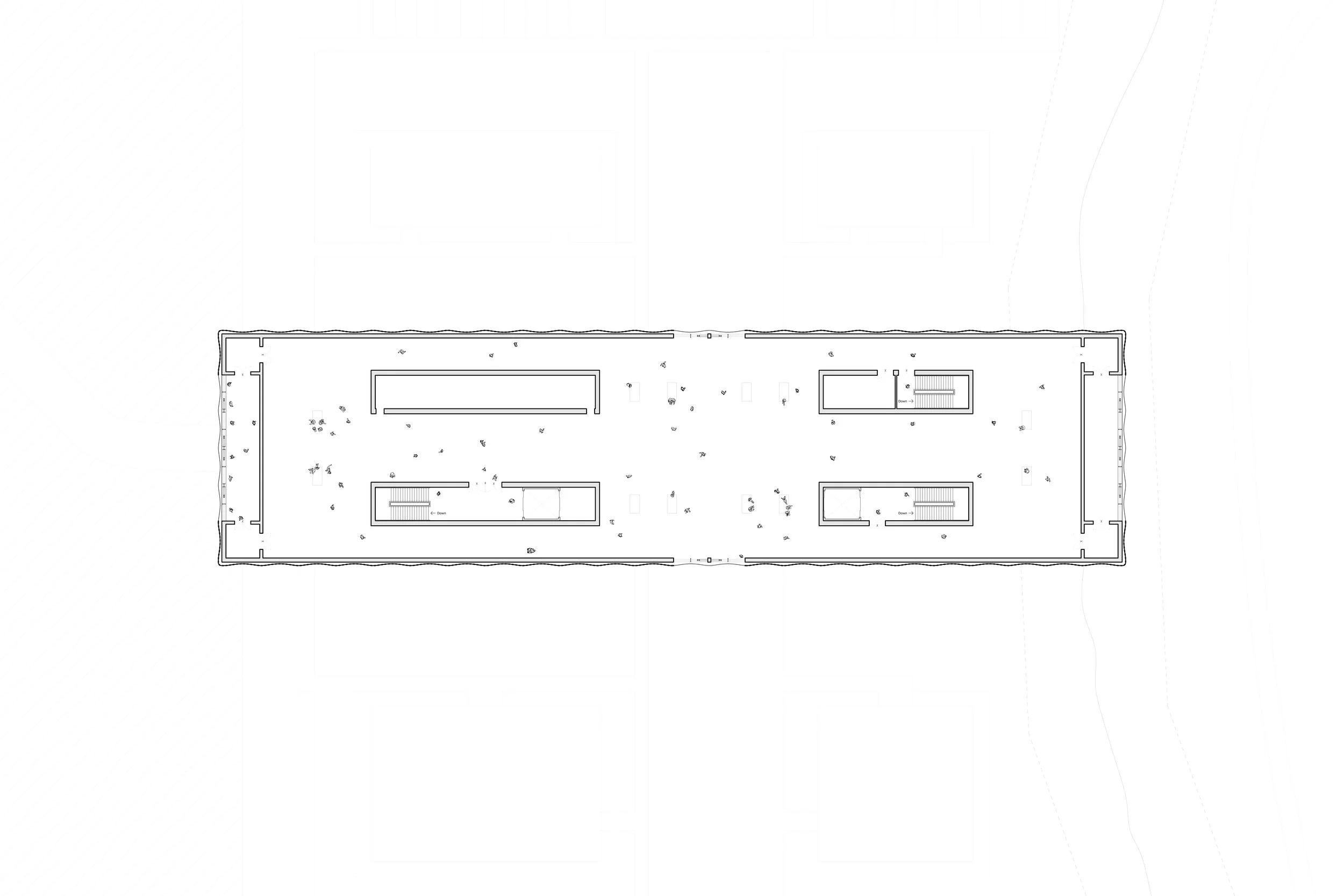
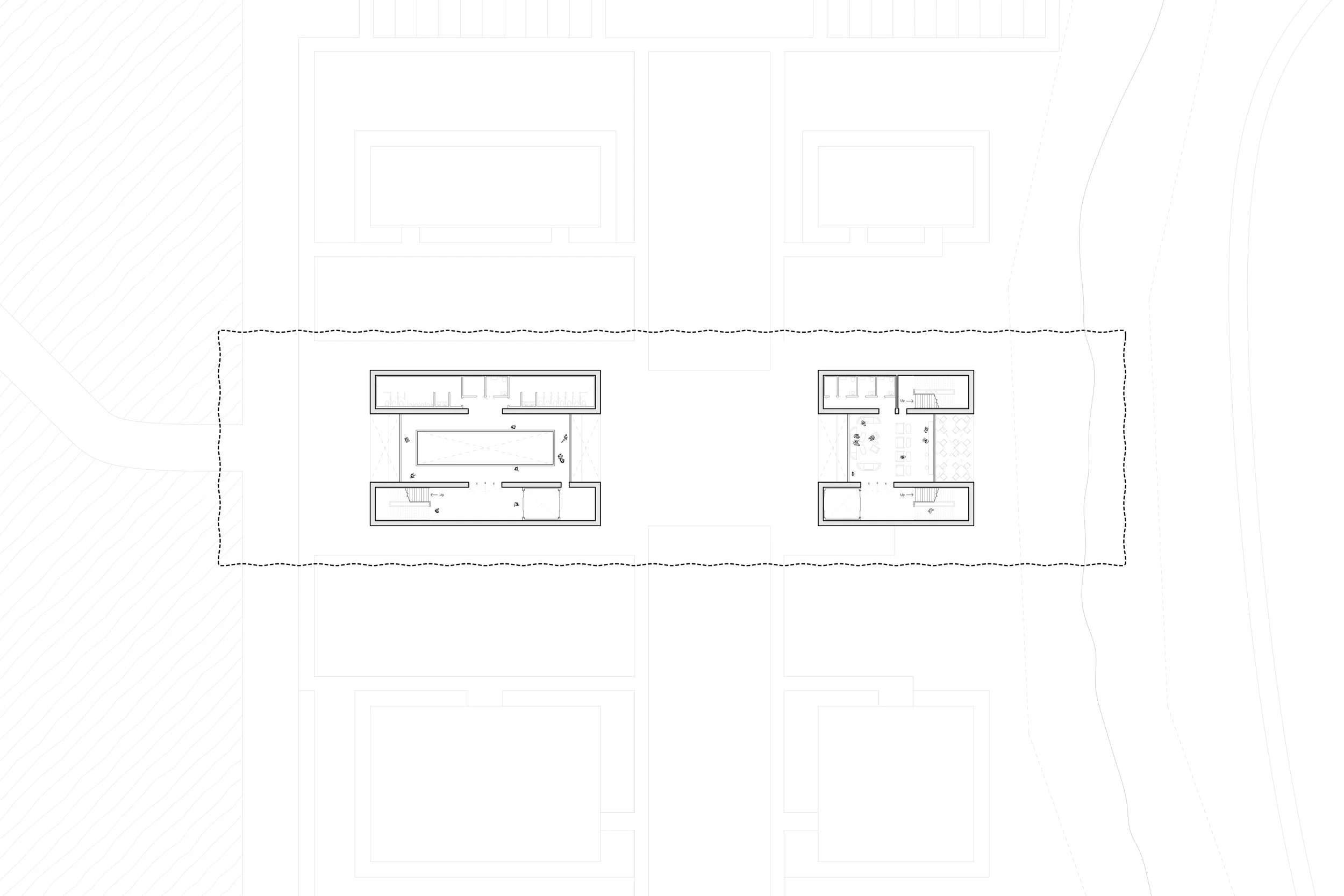
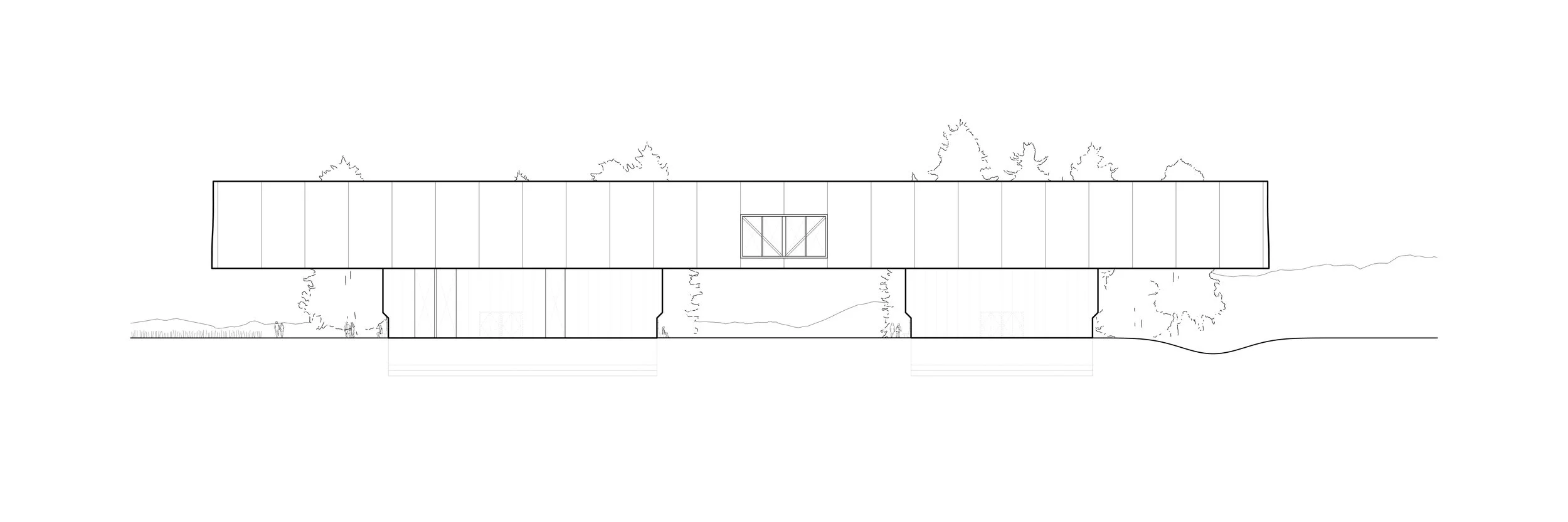
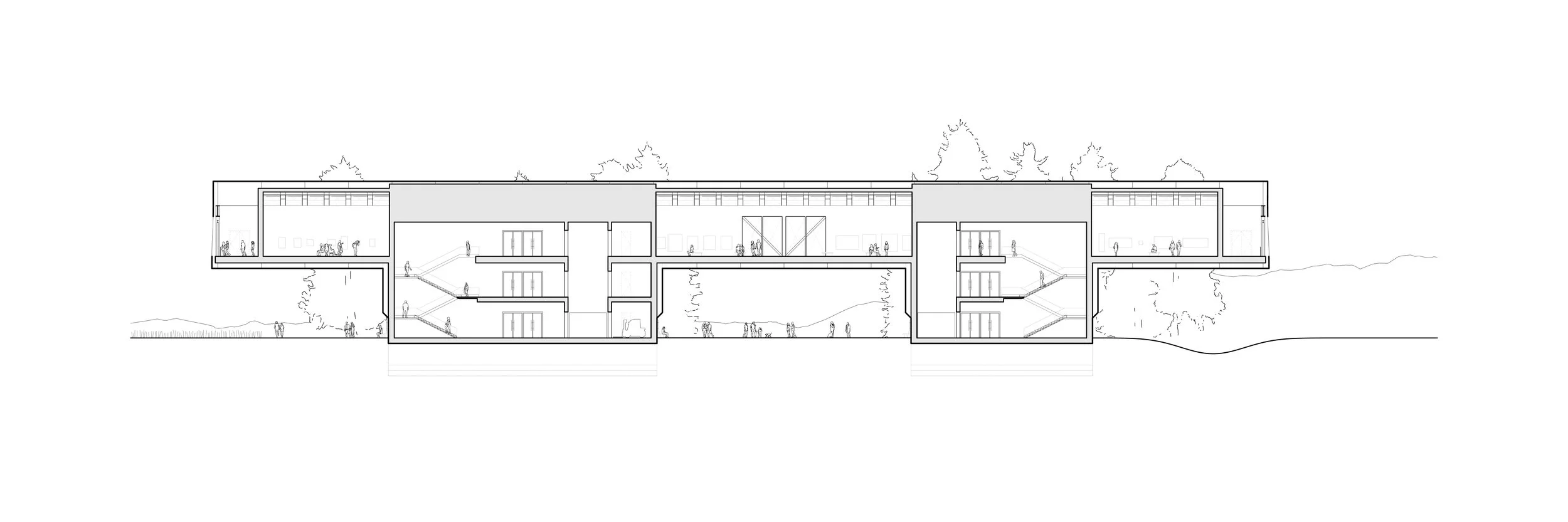
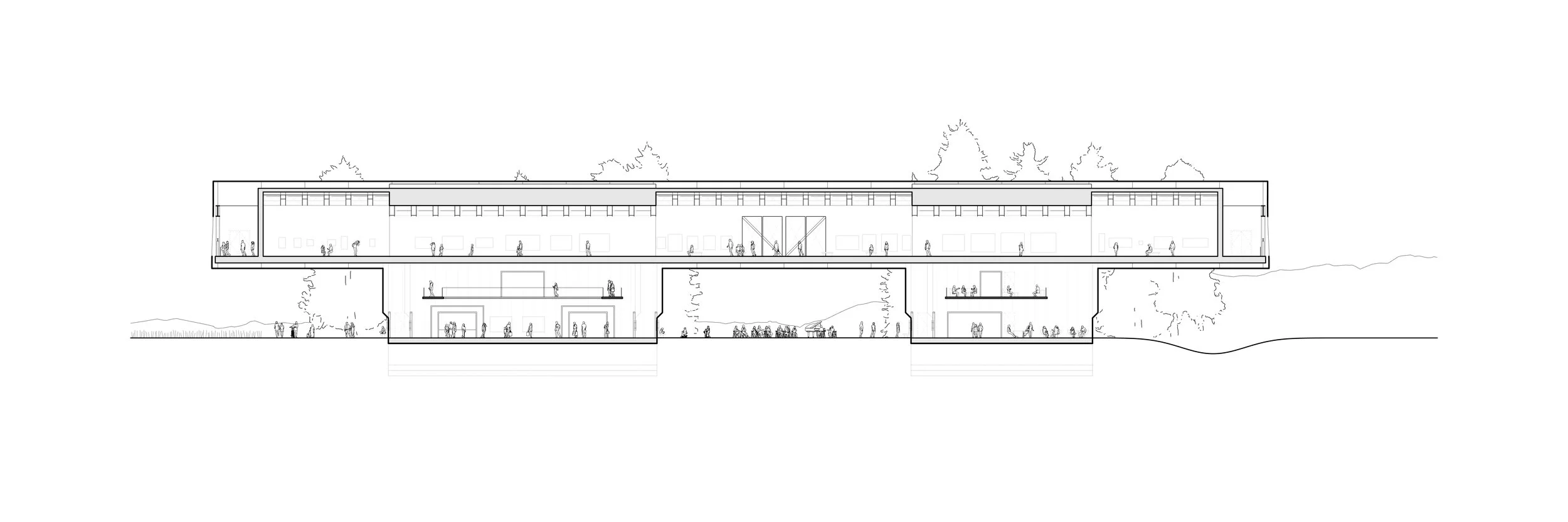
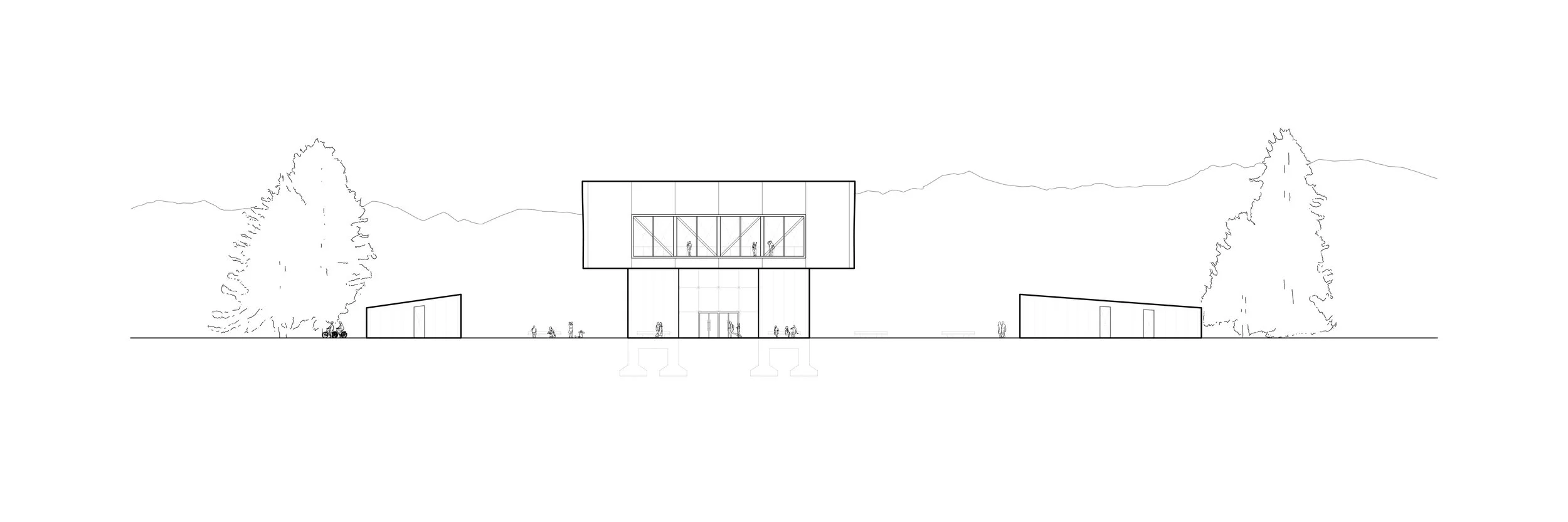
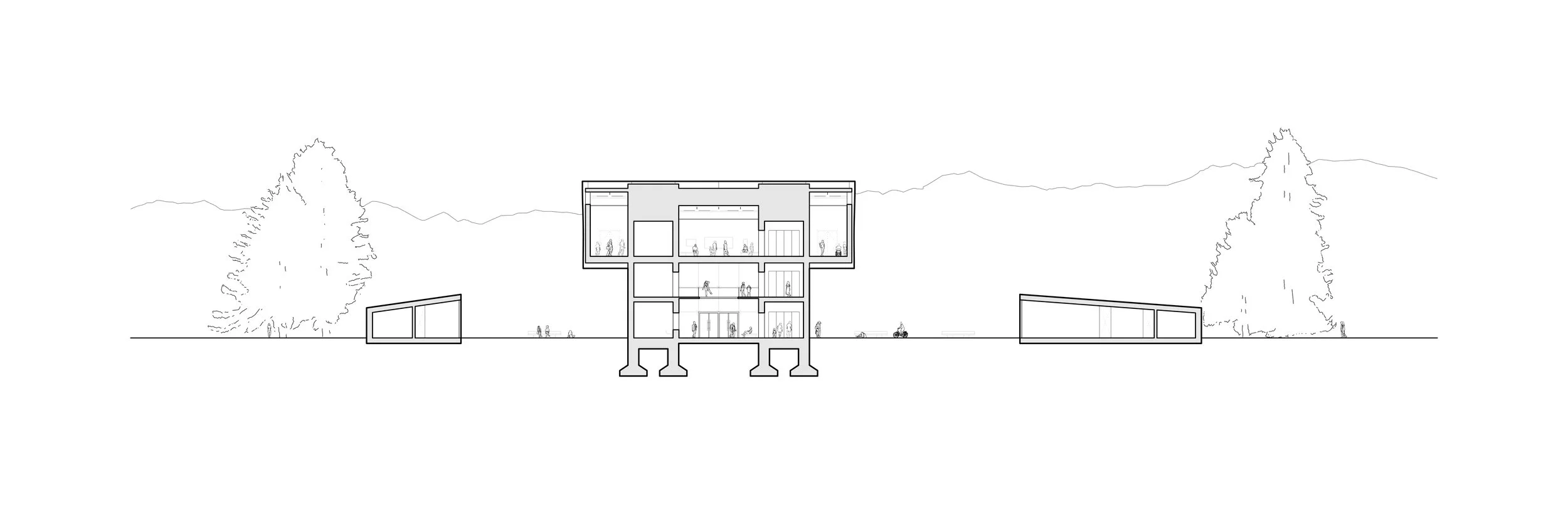
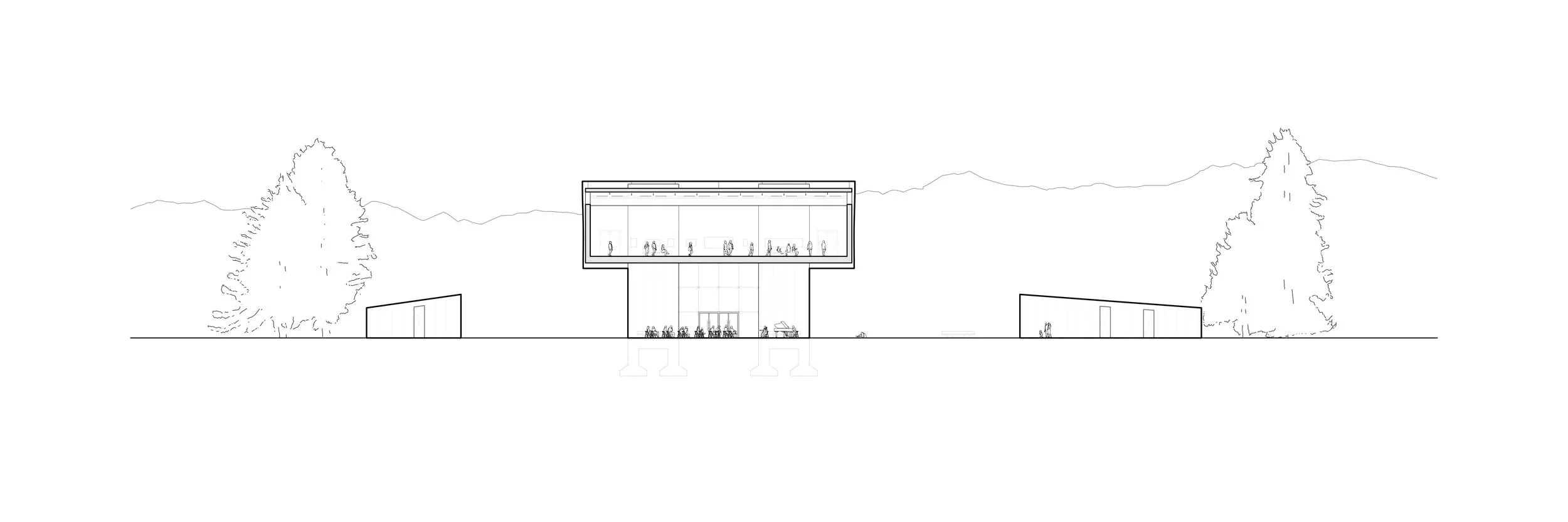
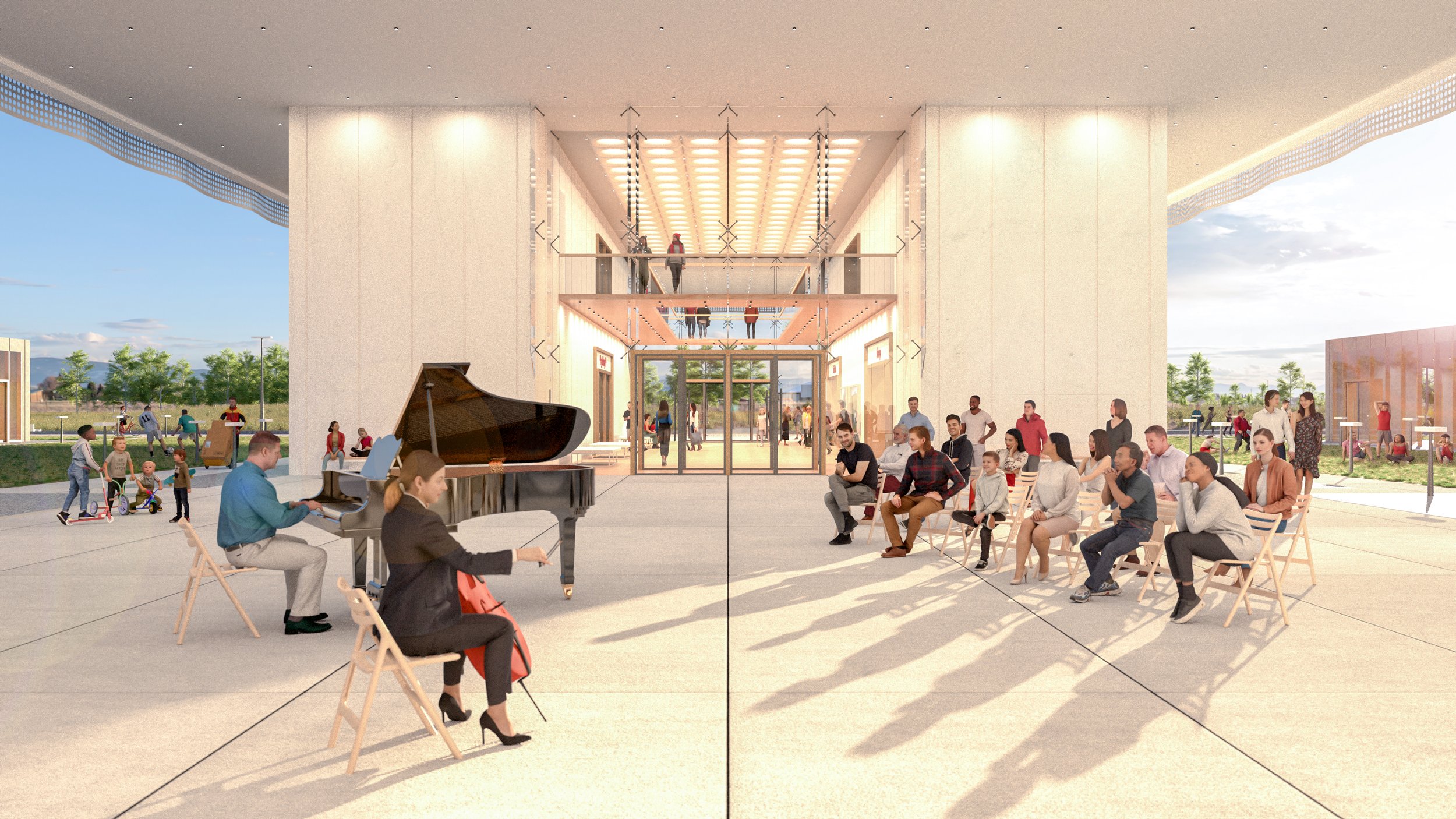
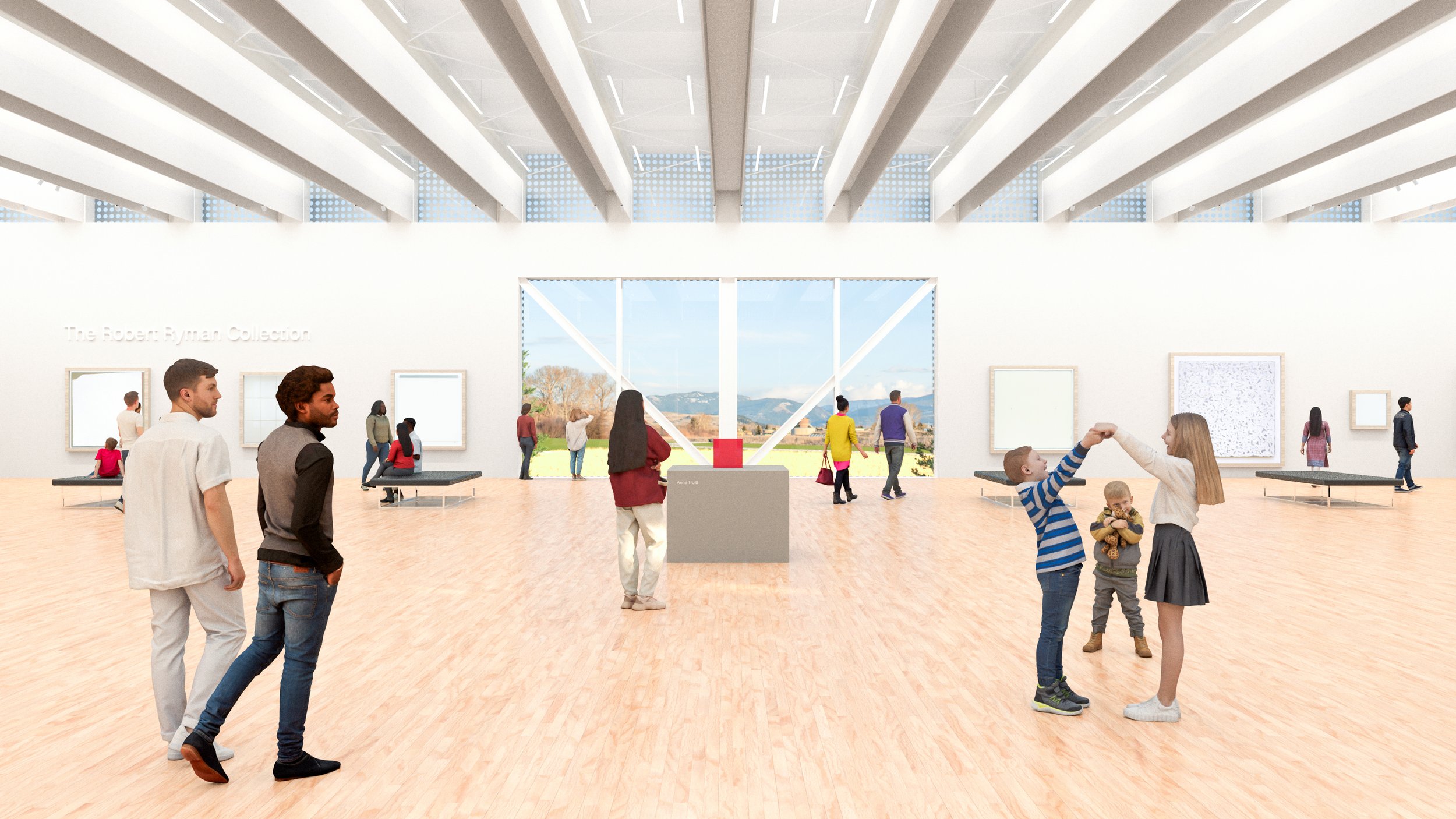
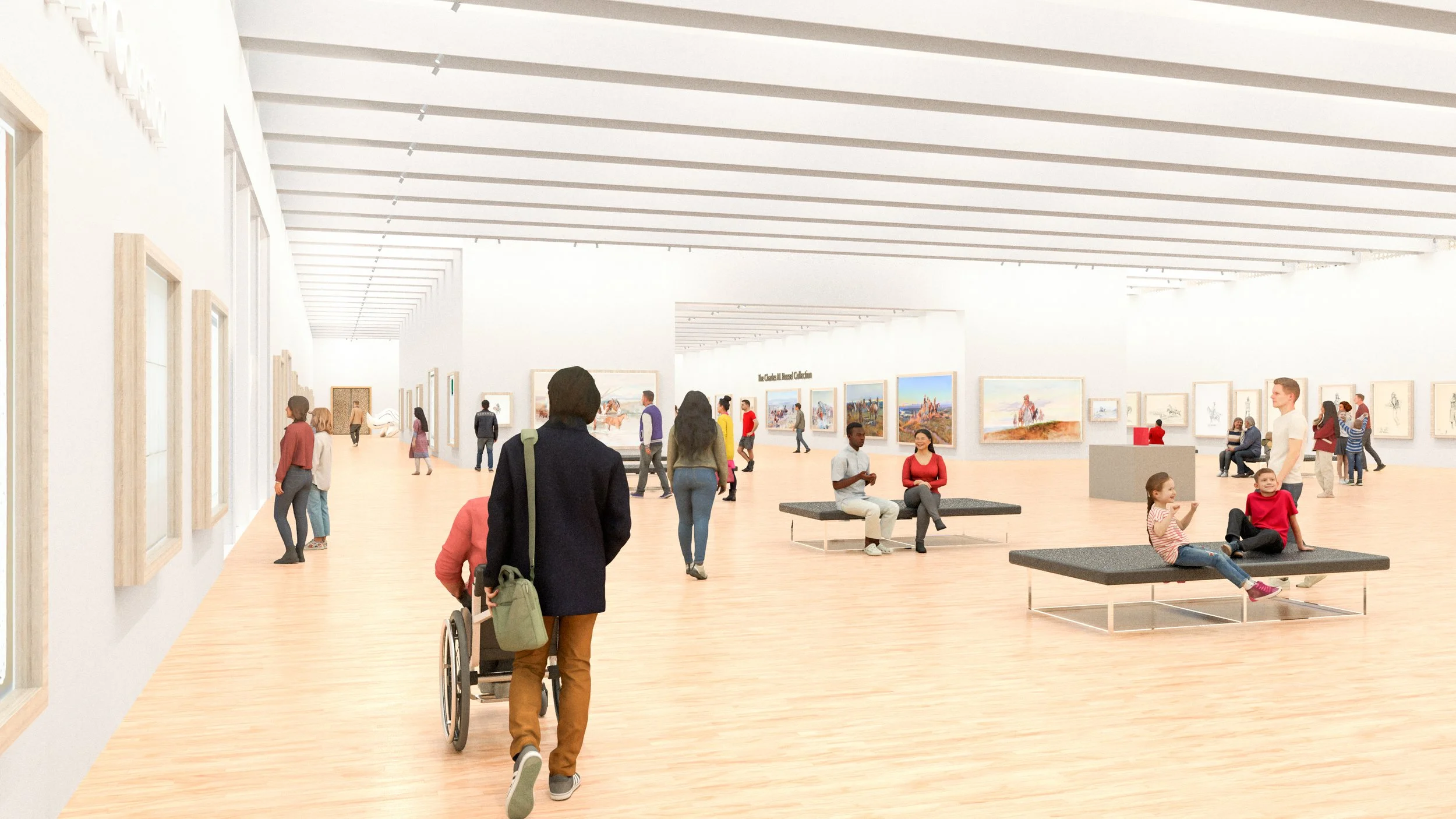
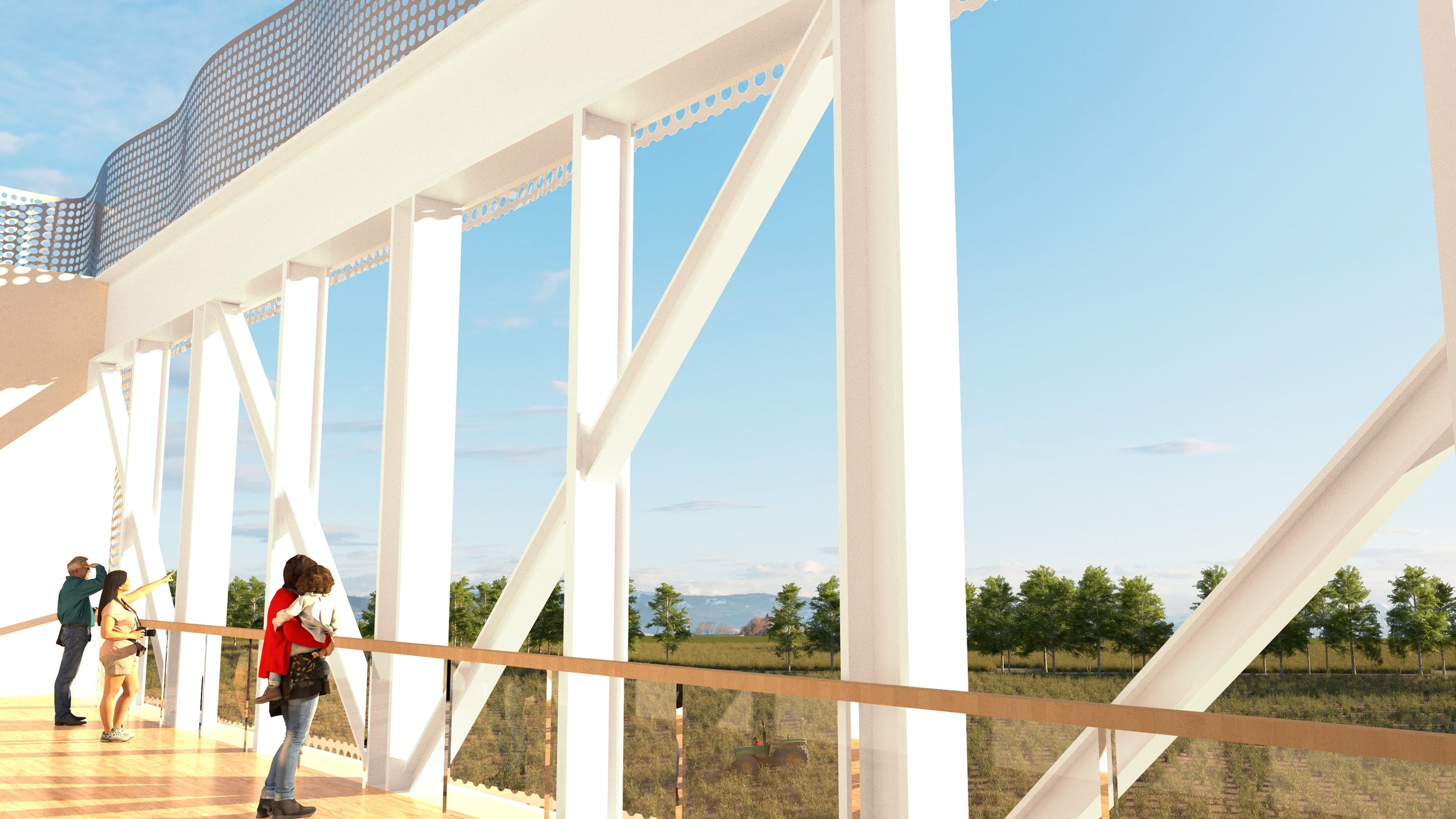
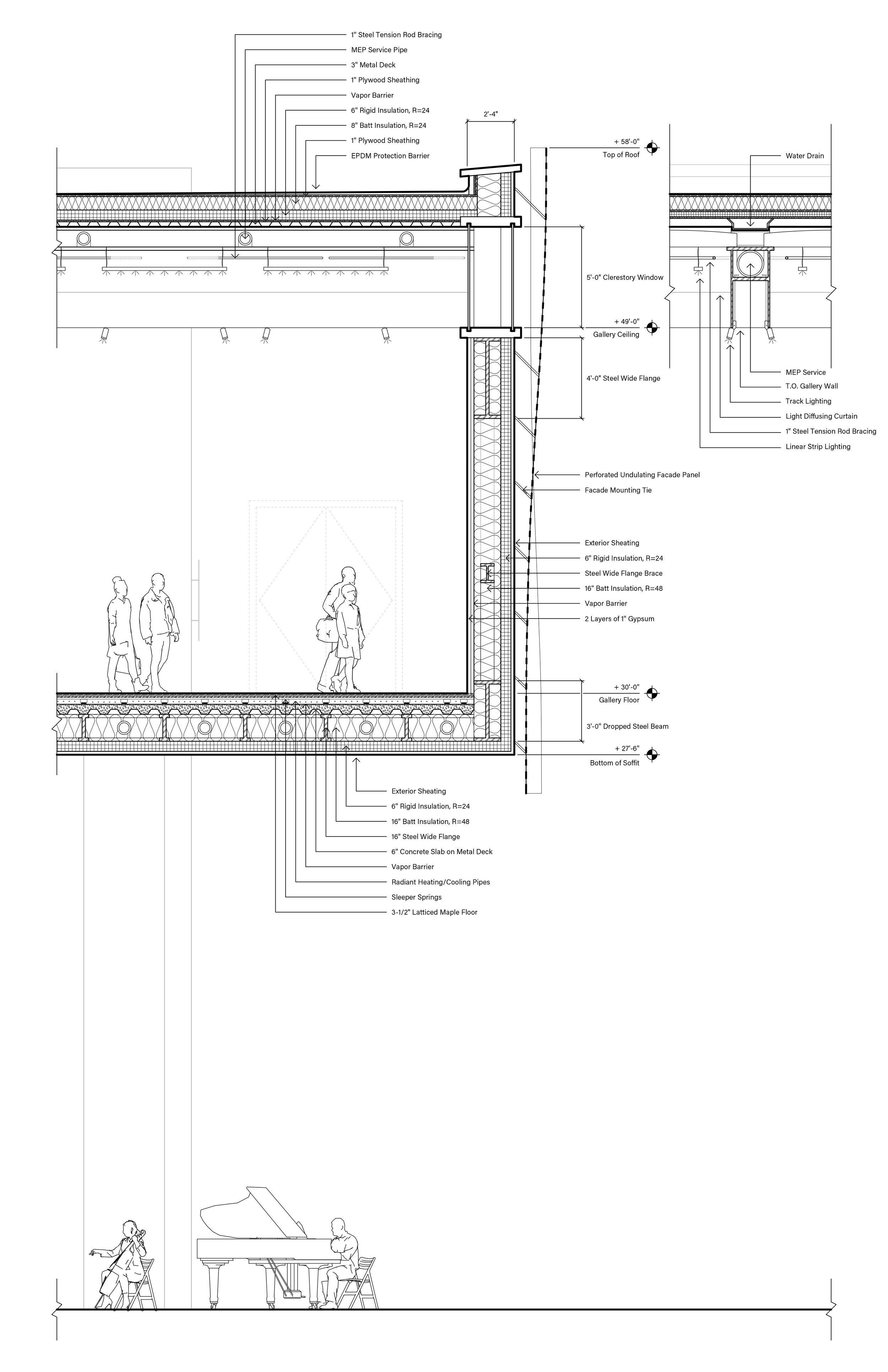
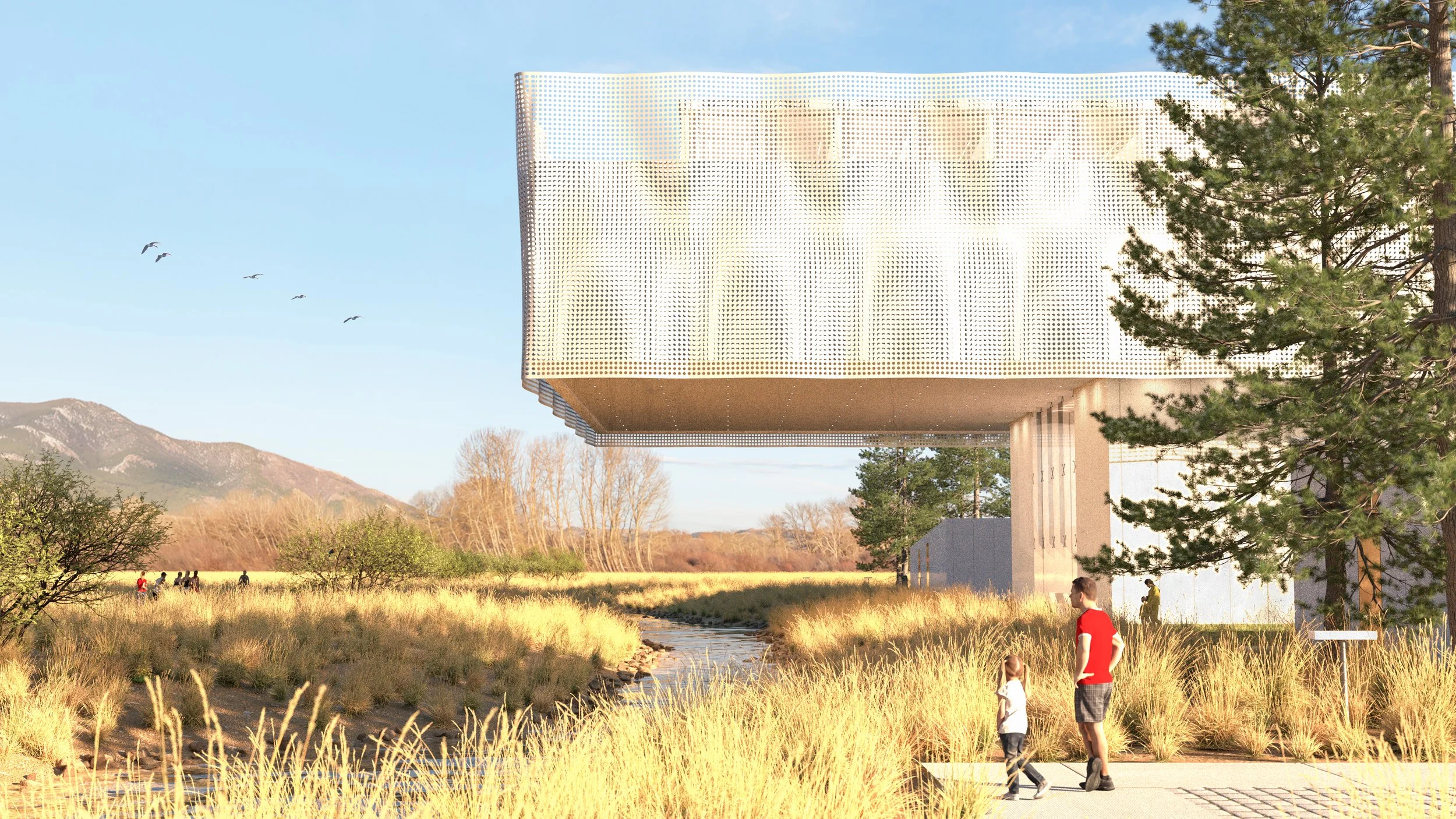
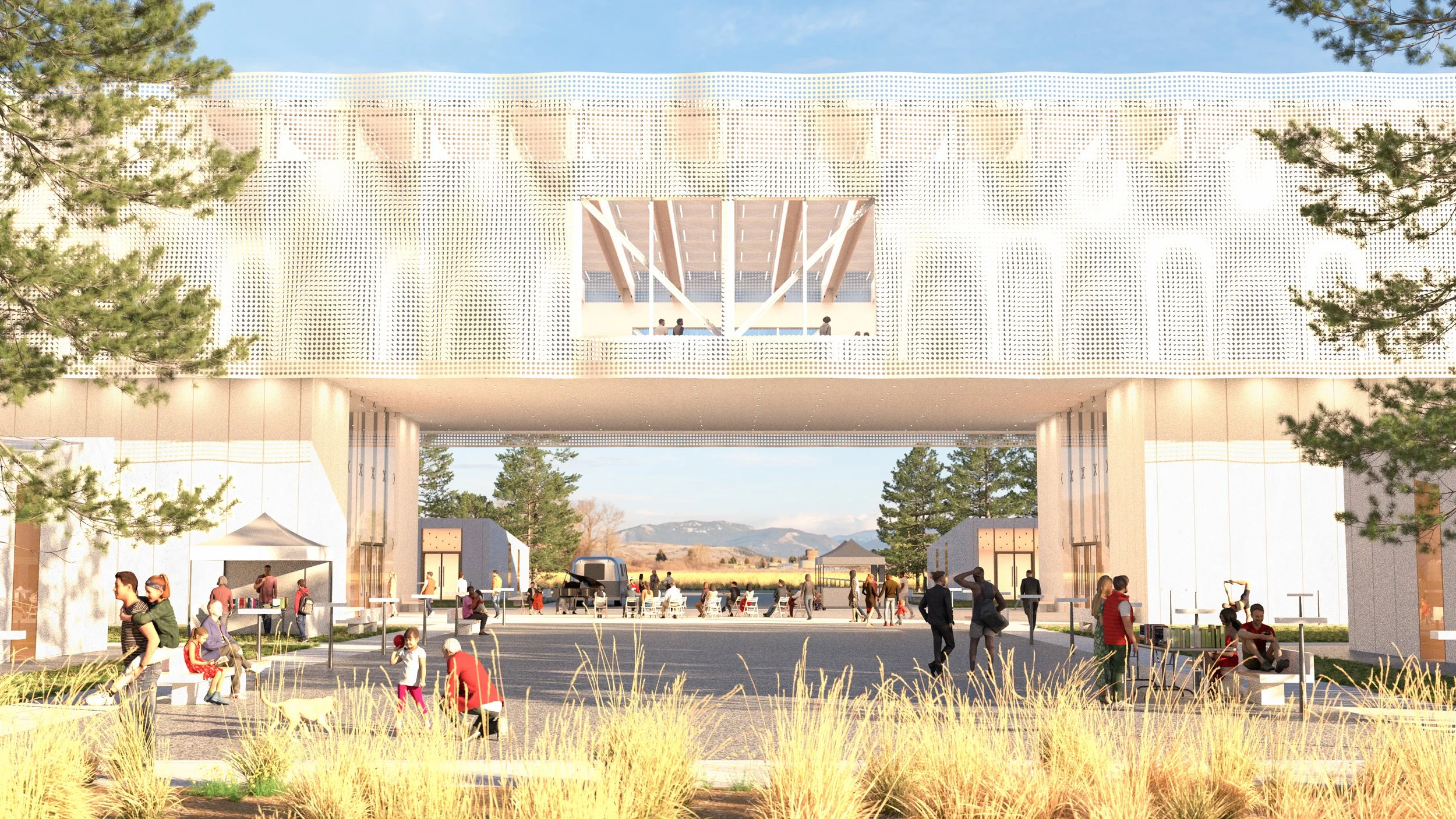
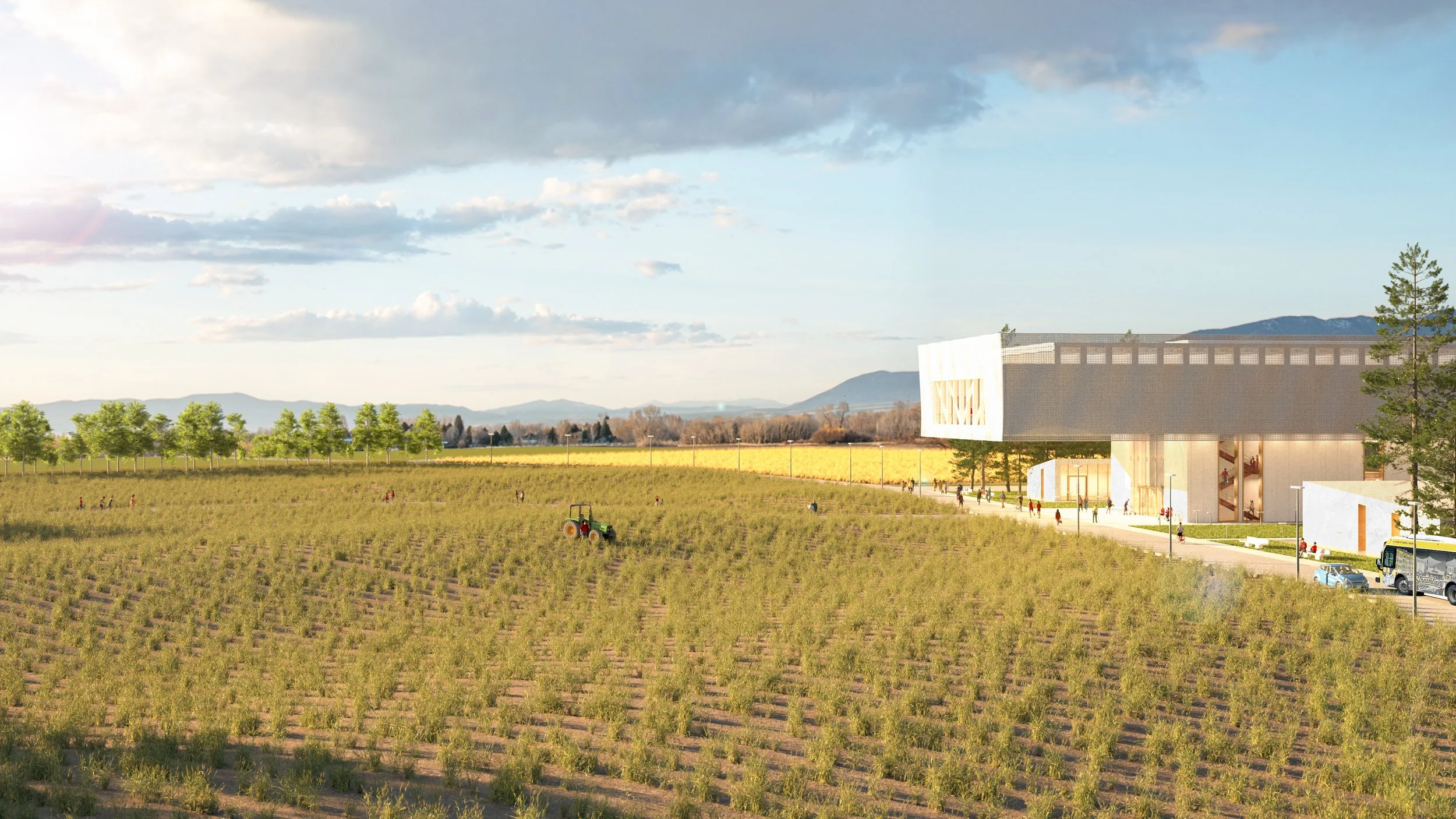
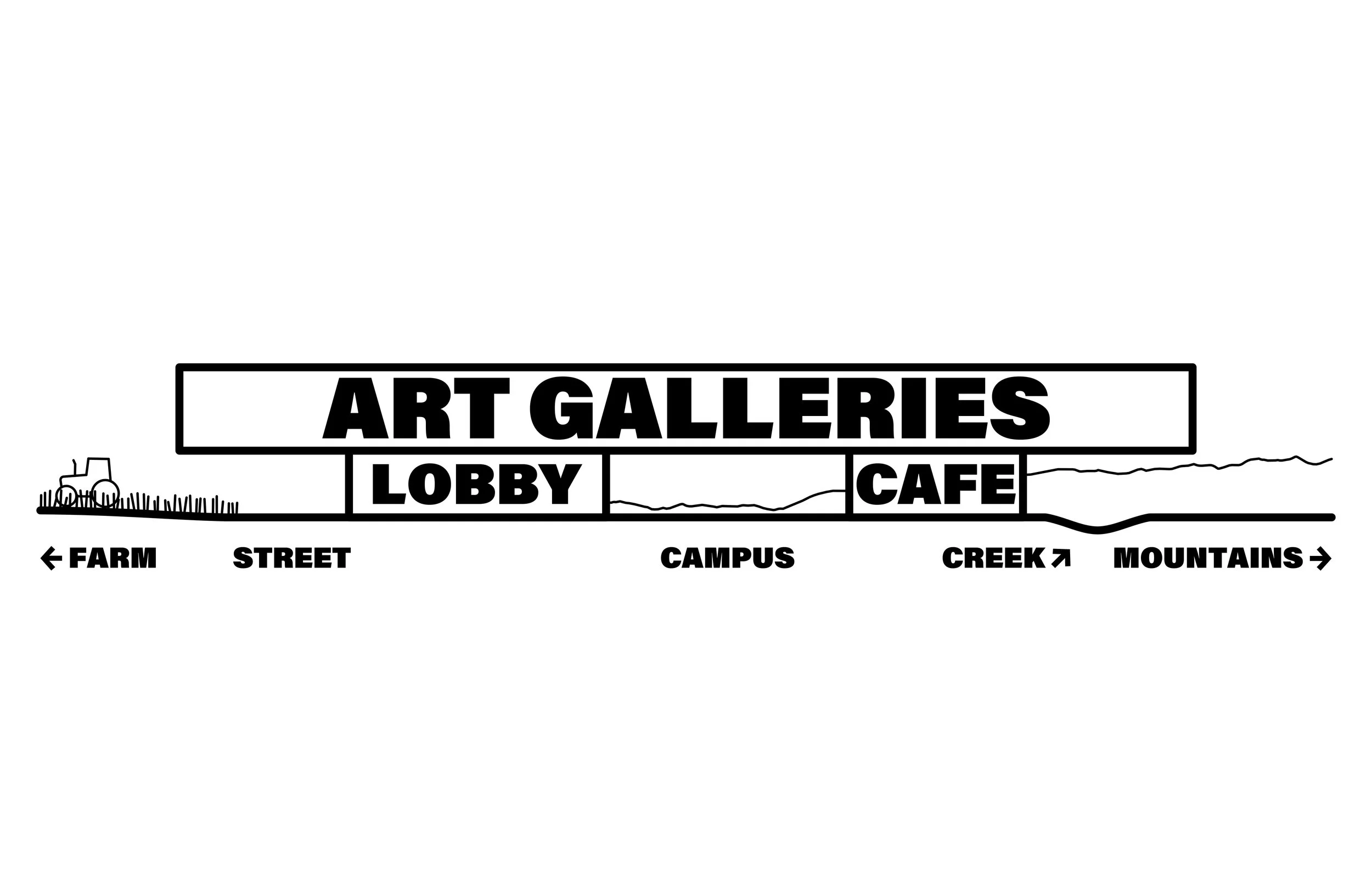
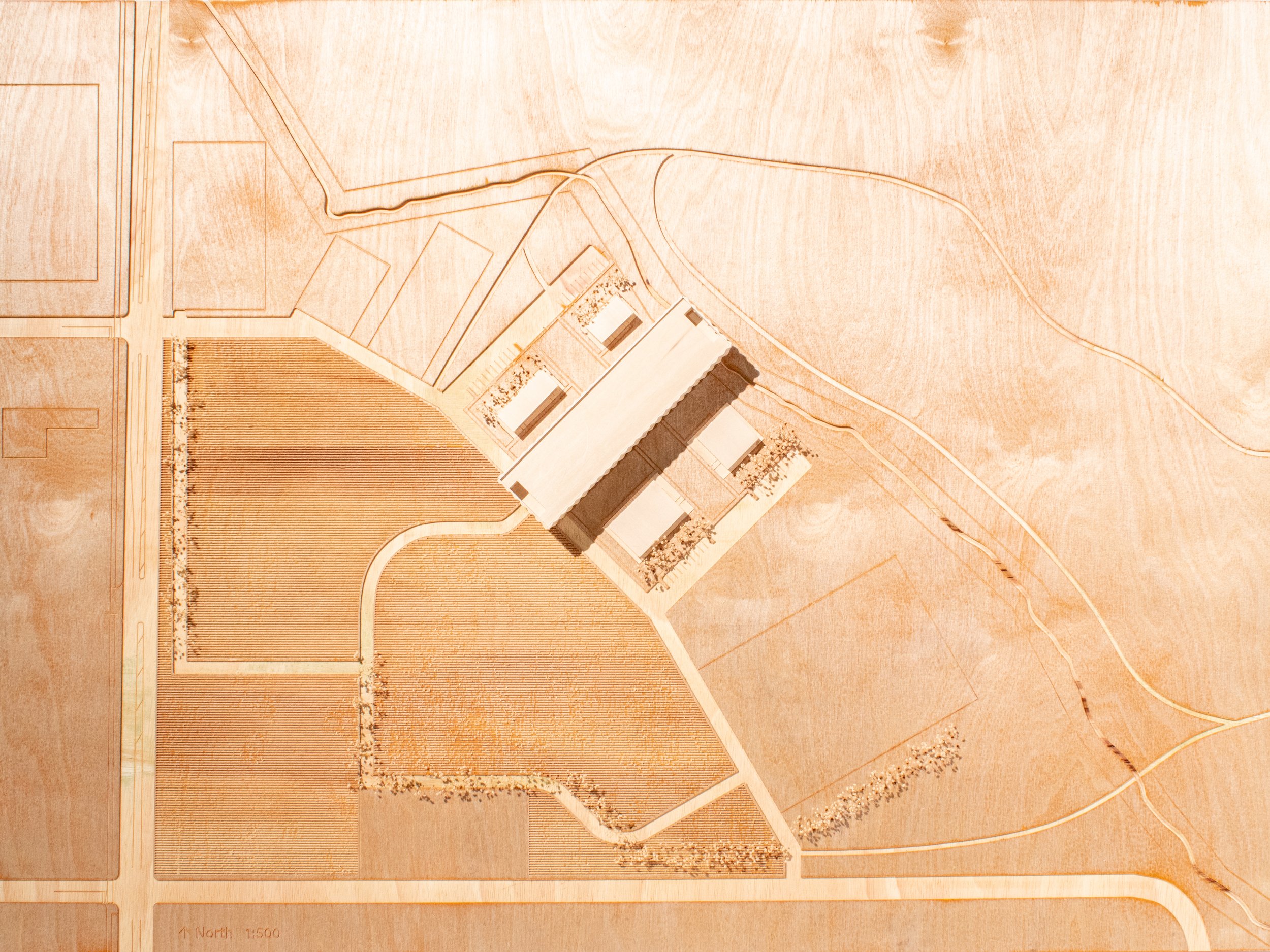
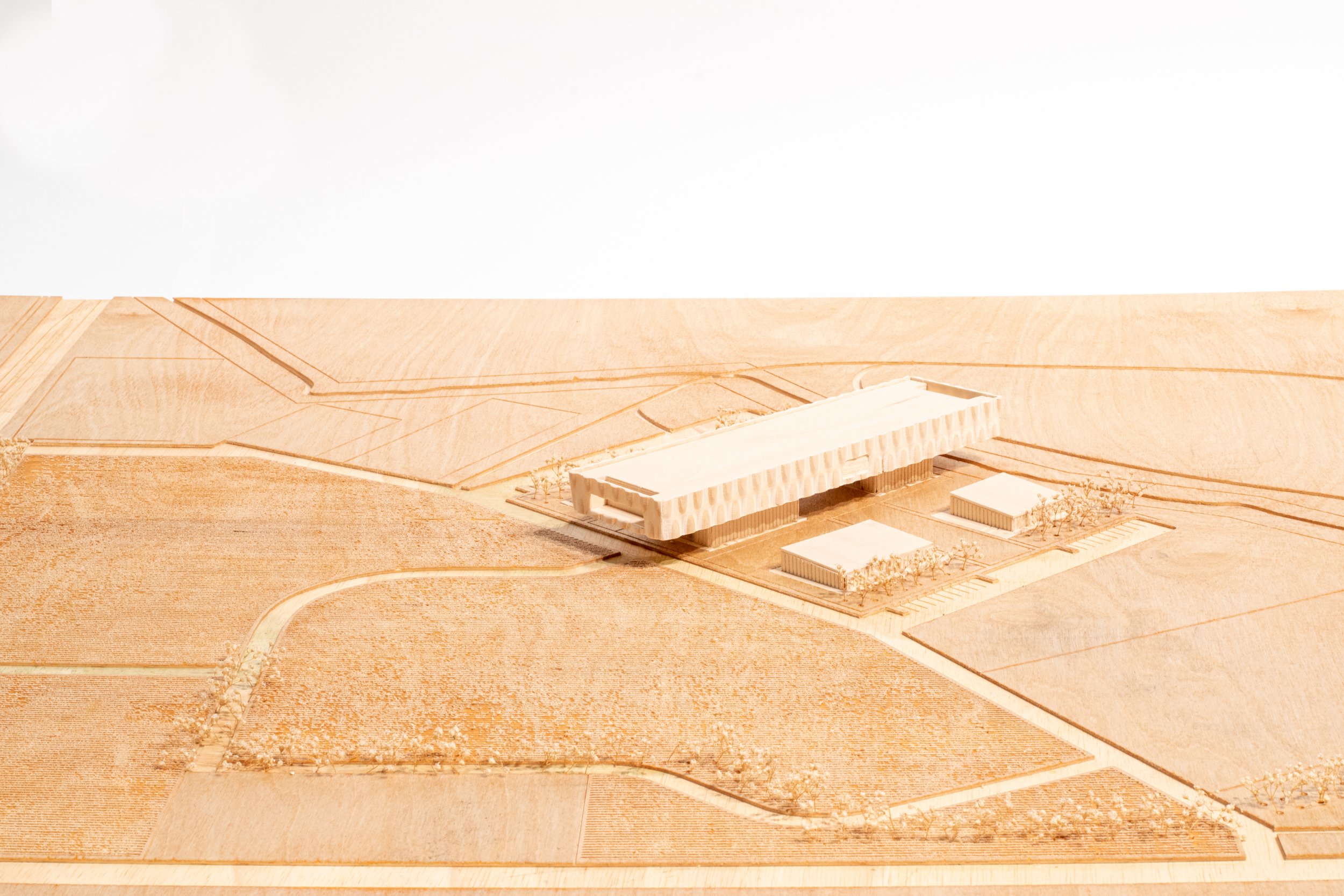
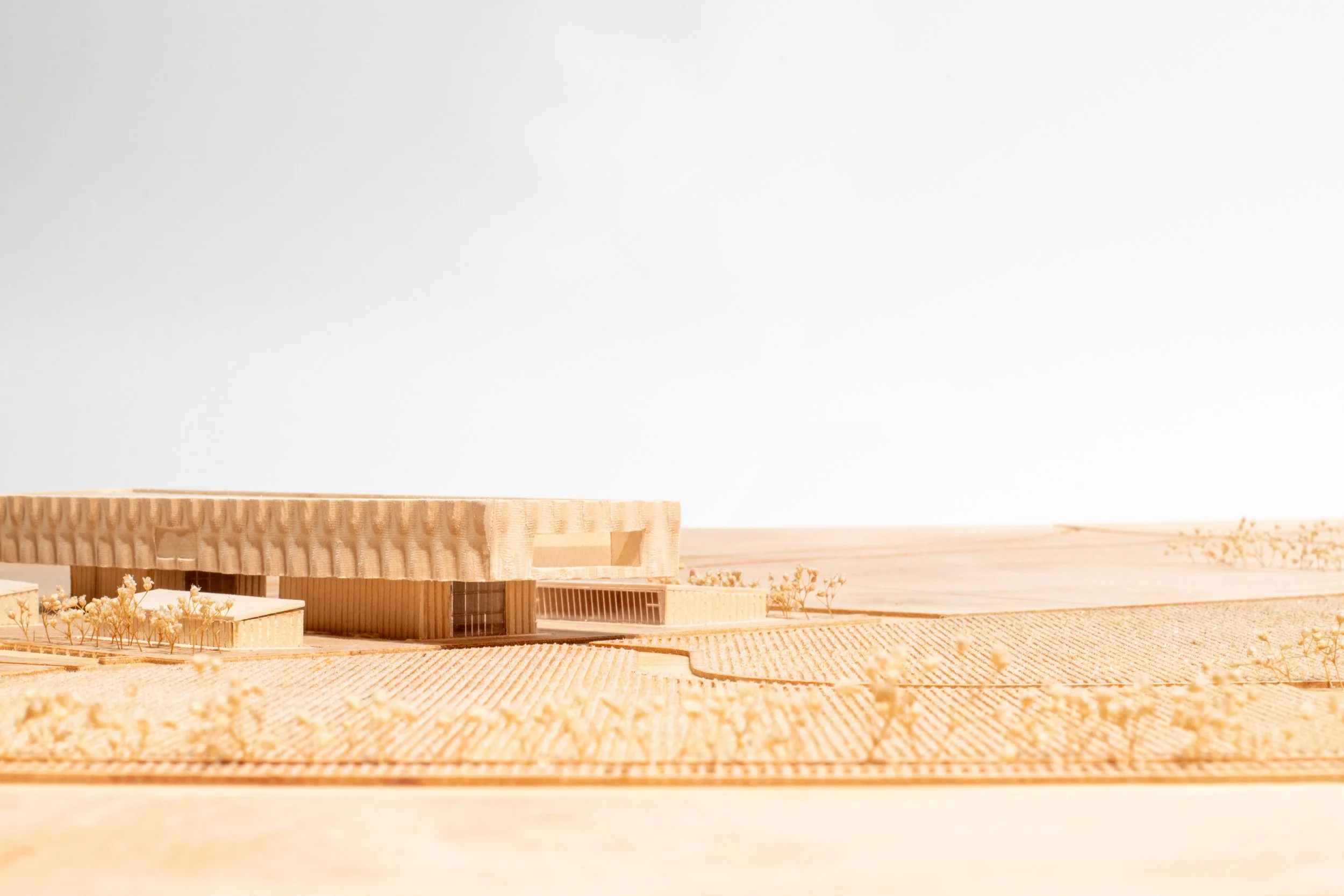
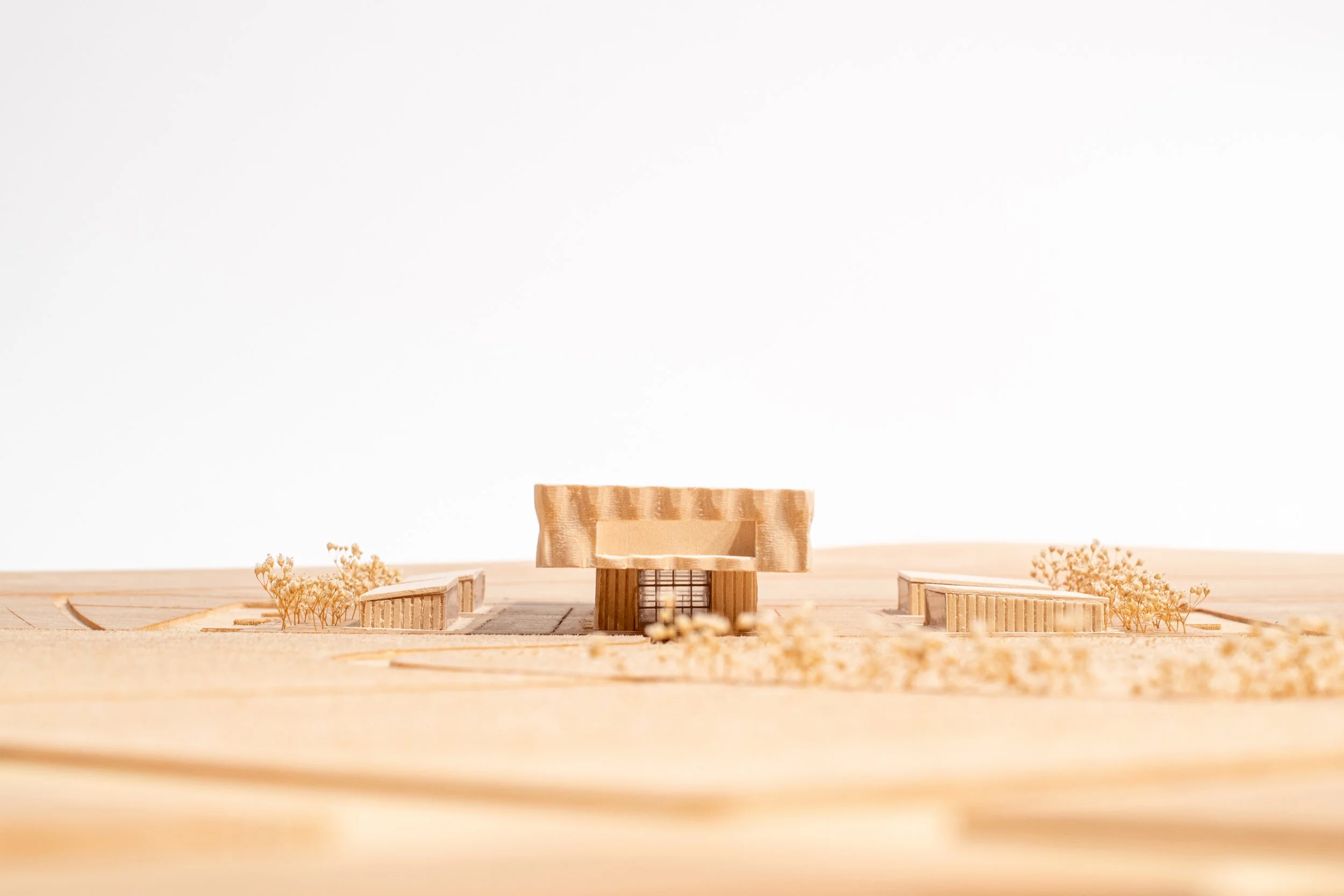
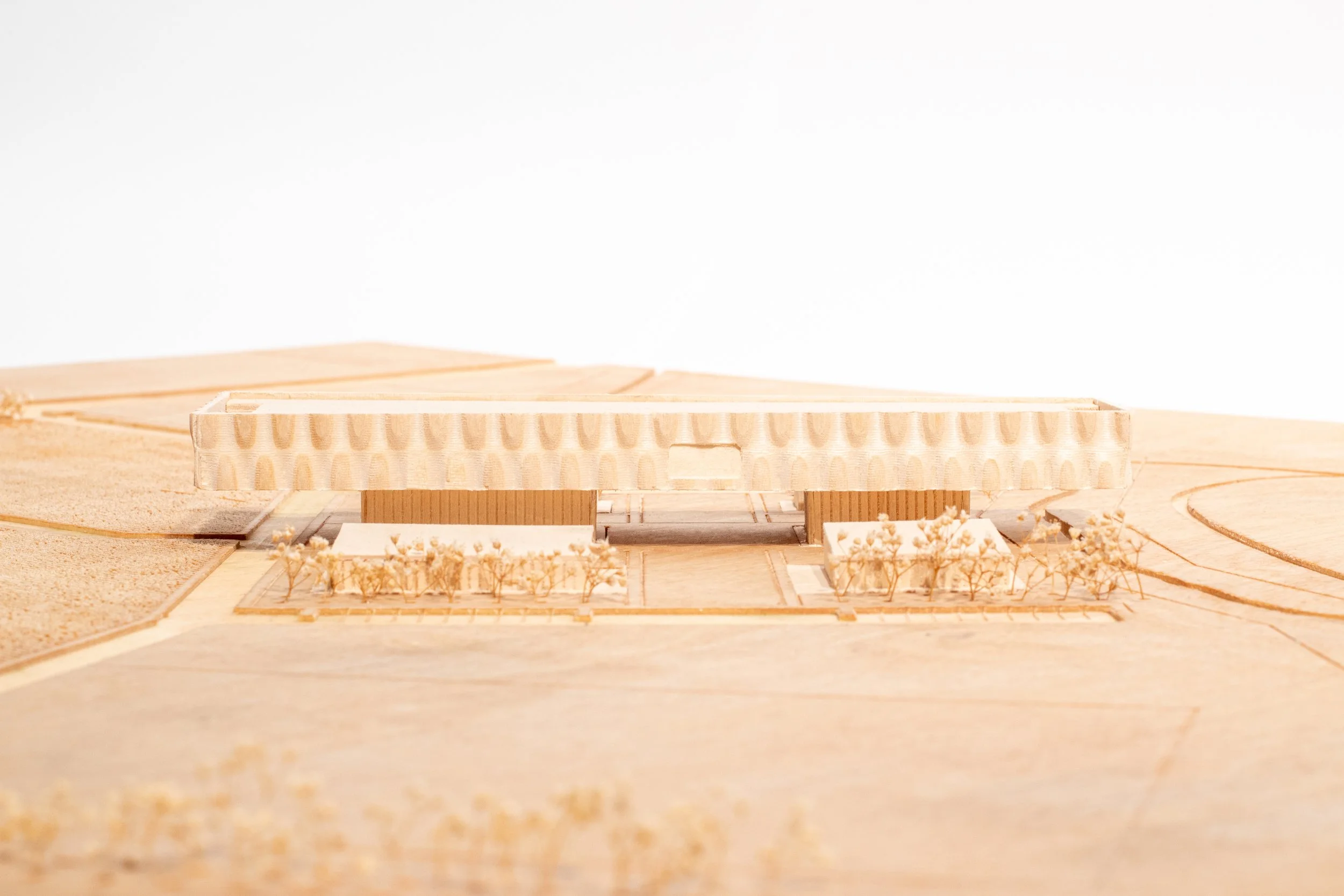
In order to maintain open agricultural space and create public plazas, I propose elevating the museum. The Bozeman Art Museum is essentially a floating box above an open field. This creates covered outdoor space for the community to enjoy 24 hours a day while maintaining agricultural activity on the site.
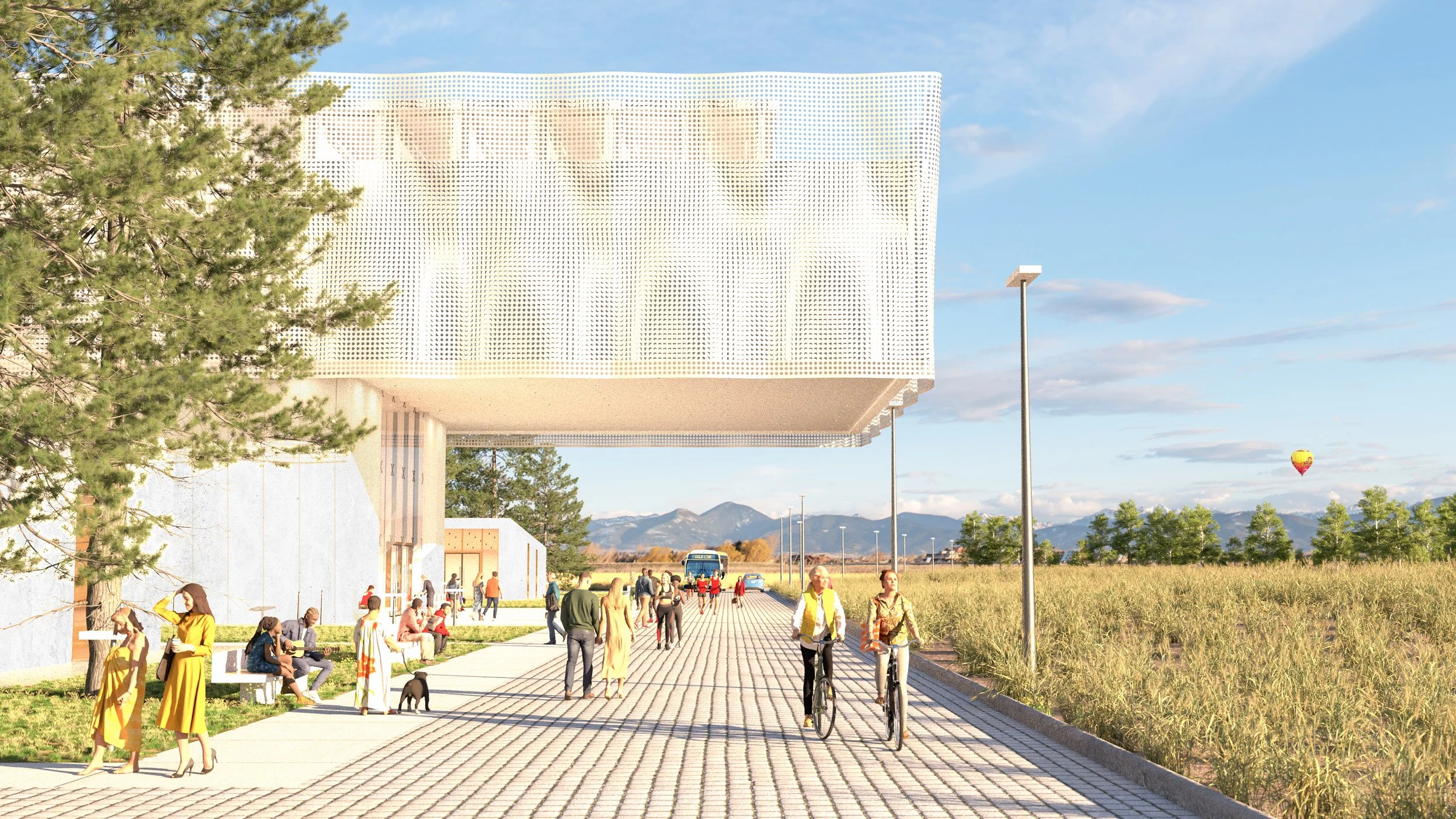
Central to this approach is getting people to the site that wouldn’t normally go to concerts or art museums. Openfield offers nearly 2 miles of comfortable walking paths through trees, farmland, and under buildings. There are several lawn spaces, a cafe, a community porch, and a covered outdoor space for farmers markets, concerts, and artist workshops. People would come here to go on a run, walk their dog, buy a croissant, look at the mountains, and of course, look at art or go to a concert. This ensures that the site is continuously active at all times of day and night, and is more authentically integrated into the community life of Bozeman.
The Openfield proposal is a departure from the typical pattern of development in Bozeman. This project is an investment. Accordingly, it will not be cheap and it will not be fast.
People will argue against it, pointing out the cost of a parking garage or the cost of building a landmark structure like this one. To them, I ask the question, what is the cost of developing this area as proposed by SMA & A&E? Their design is cheap and fast, and will result in another underused strip mall parking lot scheme, and add to the repertoire of Montana’s agricultural landscape that is lost forever.
Bozeman has a unique opportunity to literally preserve its grassroots while marking its ever-growing cultural presence. Before we break ground, we need to slow down and reassess our values. We won’t get a second chance. Let’s get it right the first time.
Phase 1
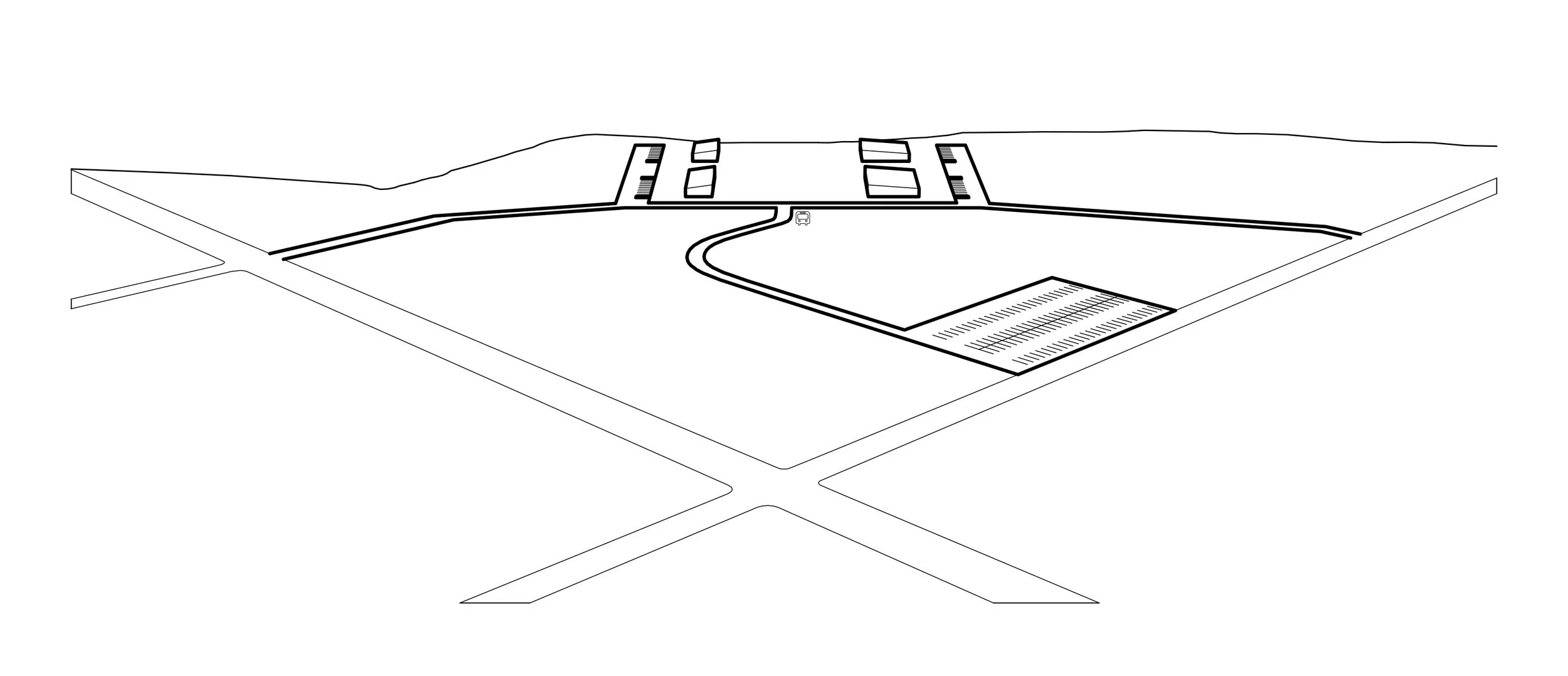
4 campus buildings, 1 bus stop, 100 parking spaces in South lot, 40 parking spaces near art museum, and a road that marks the areas for future development.
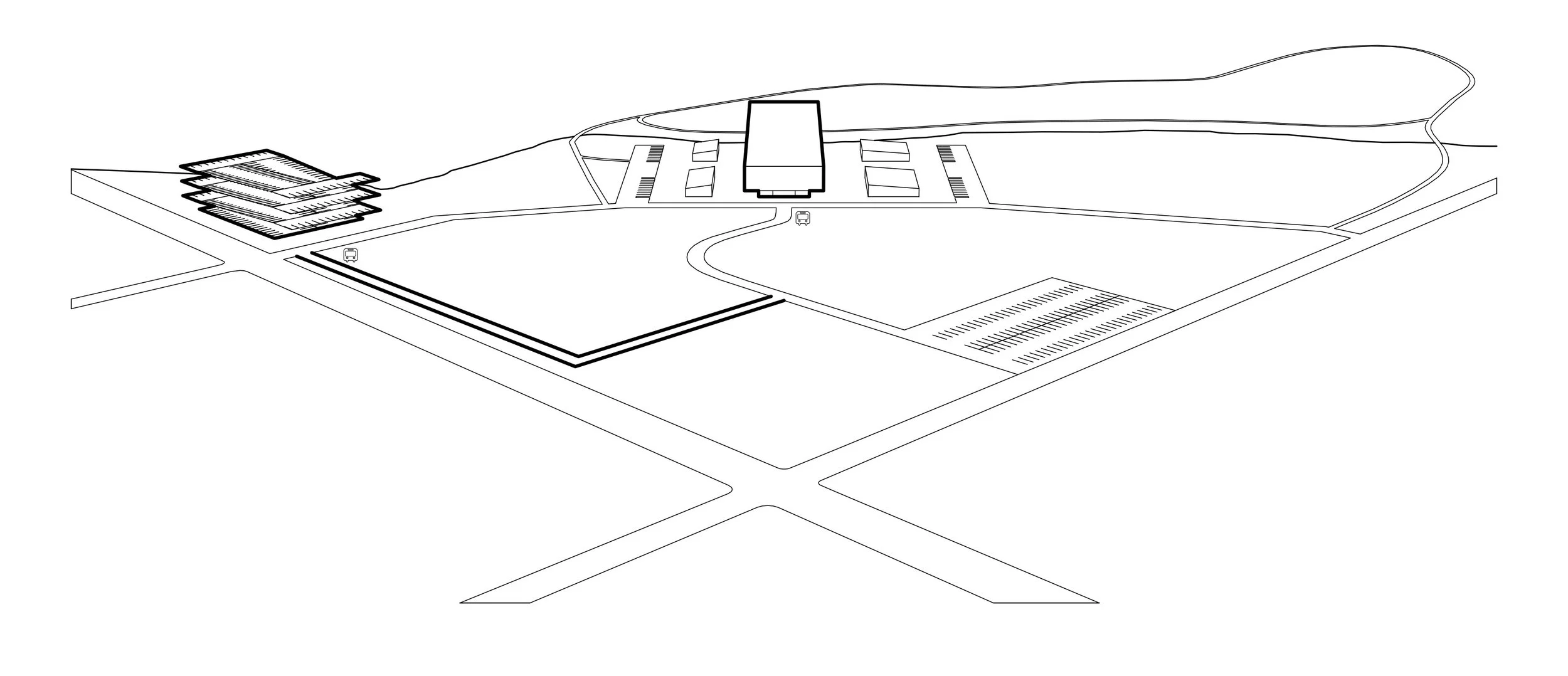
Phase 2
Bozeman Art Museum, 1 more bus stop, 360 more parking spaces in the parking garage, and a trail system that draws people to the site.
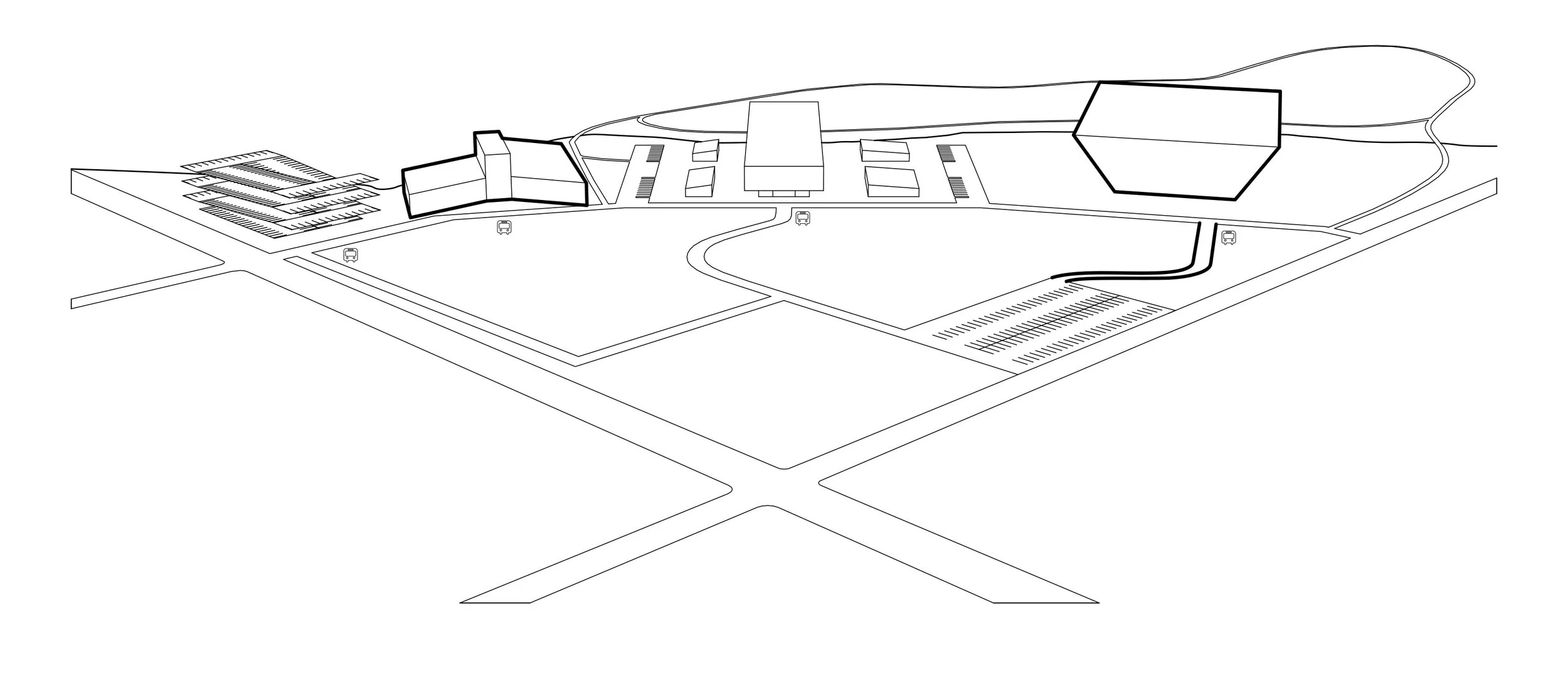
Phase 3
Concert hall, computer/children’s museum, 4 total bus stops, 500 total parking spaces, and a saved agricultural land with lively community.